Daily Digest — October 21, 2026
A pronghorn crossed a new grass bridge over Interstate 25, the first in decades. A Sydney study says one in four severe depressions may be a body clock.
Subject: A pronghorn crossed a grass bridge, and a man woke tired on purpose
Preview text: A pronghorn used a new bridge over Interstate 25, the first in decades. A Sydney study says one in four severe depressions may be a body clock.
Good morning. Here's what's going right.
🌟 Today's Lead
The Grass Bridge
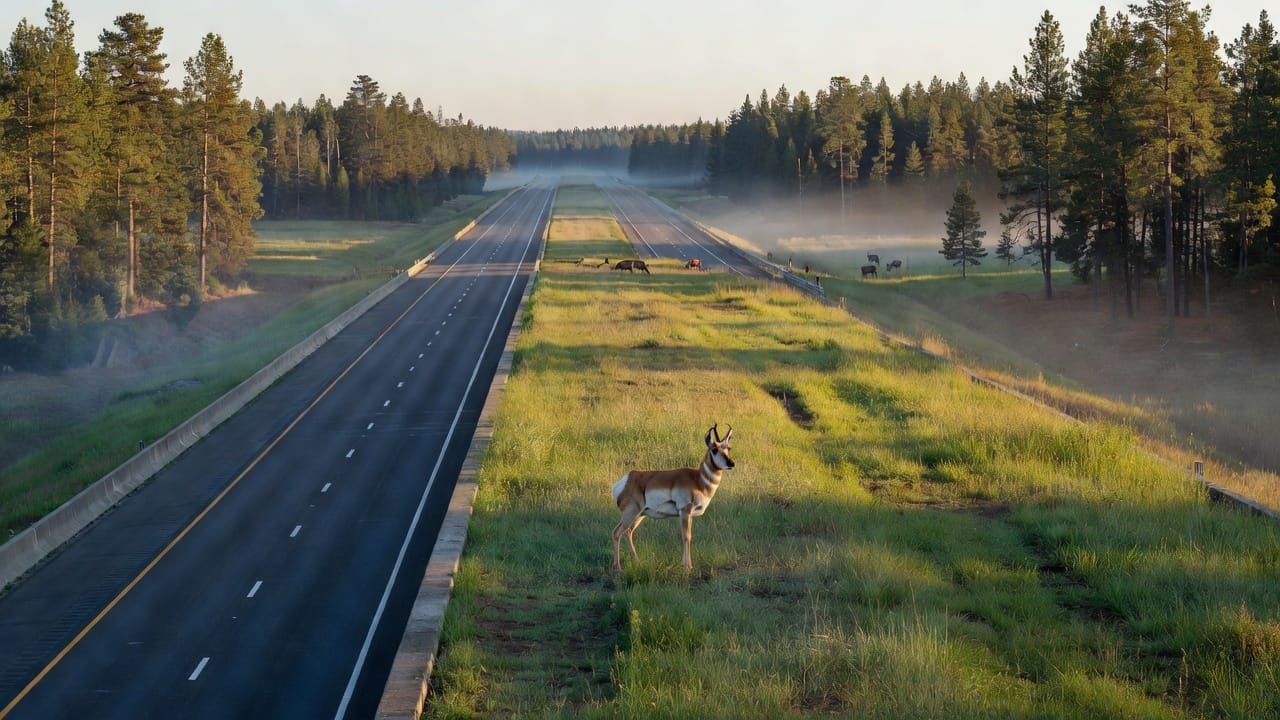
A pronghorn stepped onto a grass bridge over six lanes of Interstate 25. The deck, 209 by 200 feet, opened in December 2025 between Larkspur and Monument, with five underpasses and miles of fence tying together 39,000 acres. In June it was the first confirmed pronghorn crossing of that interstate in 20 to 30 years. In the ten months since the bridge opened, state officials told The Colorado Sun that drivers have hit two animals, against about one a day before. The often-quoted 91 percent drop belongs to an earlier study of the fencing and underpasses, not to this deck. Two collisions is not zero.
In Brief
🩺 The Wrong Clock
Sam Hockey has woken tired since a house fire when he was eight. He is a co-author on a University of Sydney paper, out today in the British Journal of Psychiatry. Of 11,380 Australians with severe depression, 2,604 — about one in four — fit a proposed body-clock subtype. It is not in the diagnostic manual. The claim that ordinary antidepressants make this group worse is self-report, not a trial.
🐝 The Hive's Medicine Cabinet
Honey, propolis and pollen were already known to fight microbes. Kenya Fernandes and colleagues at the University of Sydney mapped 24 colonies in New South Wales and found the hive places them on purpose. Antimicrobial activity rises toward the brood, and is strongest against bacteria, including American foulbrood. It is a floor plan, not a treatment.
🍁 Sap, on Their Terms
On 30 September the Mi'kmaq Nation and the US Department of Agriculture signed a $108,000, five-year deal to make tribal maple syrup production more efficient. NRCS announced it on 16 October and called it the first such agreement in Maine. The new boiler is not confirmed installed. The signature is the fact. The syrup is next season.
📊 Progress by Numbers
- Two wildlife collisions in about 10 months on the I-25 stretch that used to hit an animal a day. The 91 percent figure is an earlier phase.
- 2,604 of 11,380. About one in four people with severe depression in an Australian cohort fit a proposed clock subtype. Not a diagnosis.
- 24 hives, five apiaries, one state. The defence is strongest at the centre. No field trial yet.
- $108,000 over five years, Presque Isle. First alternative funding agreement of its kind in Maine. Sap not yet in the bottle.
- 134 million native seeds by drone on the São Sebastião scars. More than 80 percent of treated slopes have cover. That figure is the project's.
- 12.2 extra hours a month in light without pain, month 6 of the bitopertin trial. The FDA already refused this drug once.
Also worth your time
After a 2023 storm tore more than 200 hectares of Atlantic Forest off the hills above São Sebastião, Restaura Litoral spent three years scattering 134 million native seeds by drone. Mongabay reported on 14 October that more than 80 percent of the treated slopes now have forest cover. Cover is not a mature forest, and the percentage is the project's, not an independent audit.
Disc Medicine says bitopertin met both goals in a phase 3 trial for erythropoietic protoporphyria: 41.4 percent less protoporphyrin in the blood, and 12.2 more hours a month in the light without pain. The FDA refused the drug earlier this year. This is a sponsor topline, not a journal paper.
📻 On Today's Episode
Bright Side Daily for 21 October. Rory and Elizabeth. A pronghorn on a grass bridge, a man who has woken tired since he was eight, a hive laid out like an immune system, and a sugarbush in Maine with a signature on it. The numbers at the end are a hillside in Brazil and a pill the regulator already refused.
Stories and sources: thebrightside.news
The Bright Side — progress, solutions, and reasons for hope. Every day.