The Wrong Clock
A University of Sydney study of 11,380 people finds about one in four with severe depression fit a proposed body-clock subtype. It is not yet a diagnosis, and it is not yet a treatment.
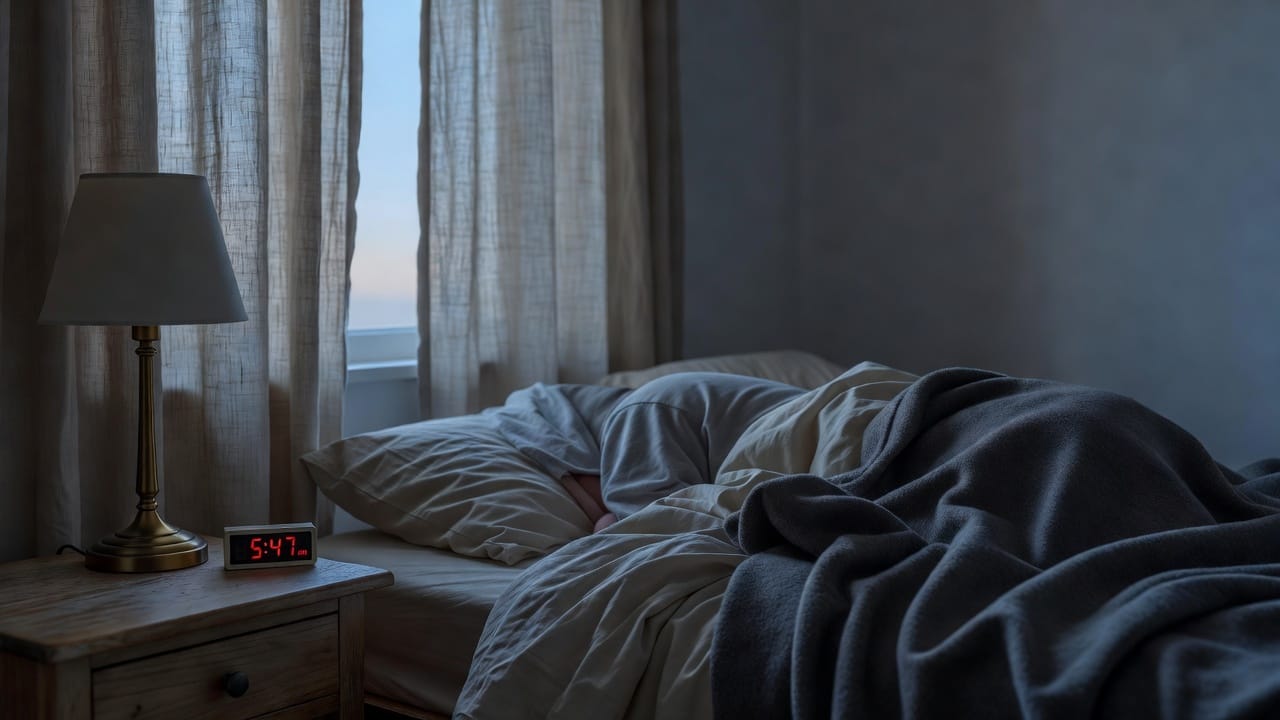
Sam Hockey has woken tired since he was eight. A new paper says that may be the depression.
Sam Hockey was eight when a house fire left him with post-traumatic stress and insomnia. He overslept, and he still woke tired. School was a fog. He is now a lived-experience researcher at the University of Sydney's Brain and Mind Centre, and a co-author on a paper published this morning in the British Journal of Psychiatry.
Emiliana Tonini and colleagues looked at 11,380 Australians in the Australian Genetics of Depression Study, all with severe, recurrent or persistent depression. 2,604 of them — about one in four — reported at least three of six signs: waking exhausted, being a night owl, a seasonal pattern, sleeping later than other people, sleeping more when depressed, and social jet lag, meaning work-day sleep and free-day sleep sit hours apart. They also reported an earlier onset and a higher genetic risk for ADHD.
Ian Hickie, a clinical psychiatrist and co-director of the centre, argues that for this group the clock is driving the depression, not trailing it. Standard SSRIs and cognitive behavioural therapy, he says, may miss it, and may make the clock worse. Tonini is more careful on that point. The antidepressant finding is self-report. It needs a trial.
Circadian depression is not in the DSM. Philip Mitchell of the University of New South Wales, who was not on the paper, called it thought-provoking and short of the bar for clinical practice. Shantha Rajaratnam of Monash said the same complaints can be bad sleep rather than a broken clock, and that asking about the clock should be added to treatment, not swapped in for it.
Hockey's own change was small. A bedside lamp on a timer. He says knowing the pattern earlier would have saved him years. That is one person's lamp, not a protocol.
Key Facts
- 11,380 adults in the Australian Genetics of Depression Study
- 2,604 met the proposed subtype: at least 3 of 6 circadian signs
- Published 21 October 2026, British Journal of Psychiatry
- Emiliana Tonini, Ian Hickie, Sam Hockey, Brain and Mind Centre, University of Sydney
- Not a DSM diagnosis
- Independent caution from Philip Mitchell (UNSW) and Shantha Rajaratnam (Monash)
Why This Matters
Depression is still mostly treated as one illness with one shelf of drugs. If a quarter of the severe cases are a timing problem, the first questions in clinic are about light, meals, and when the person actually sleeps. The paper is a sorting, not a cure. Sorting is how a field stops giving everyone the same pill.
What We Don't Know Yet
Whether SSRIs worsen this group. That claim is self-reported, not a randomised comparison. The subtype overlaps atypical depression, and Mitchell wants a cleaner split. The cohort is Australian. Nobody in the study was assigned morning light or melatonin against usual care. A bedside timer helped one co-author. It is not a prescription.