The Hive's Medicine Cabinet
University of Sydney researchers mapped 24 hives and found honey, propolis and pollen are placed as a coordinated antimicrobial defence, strongest around the brood.
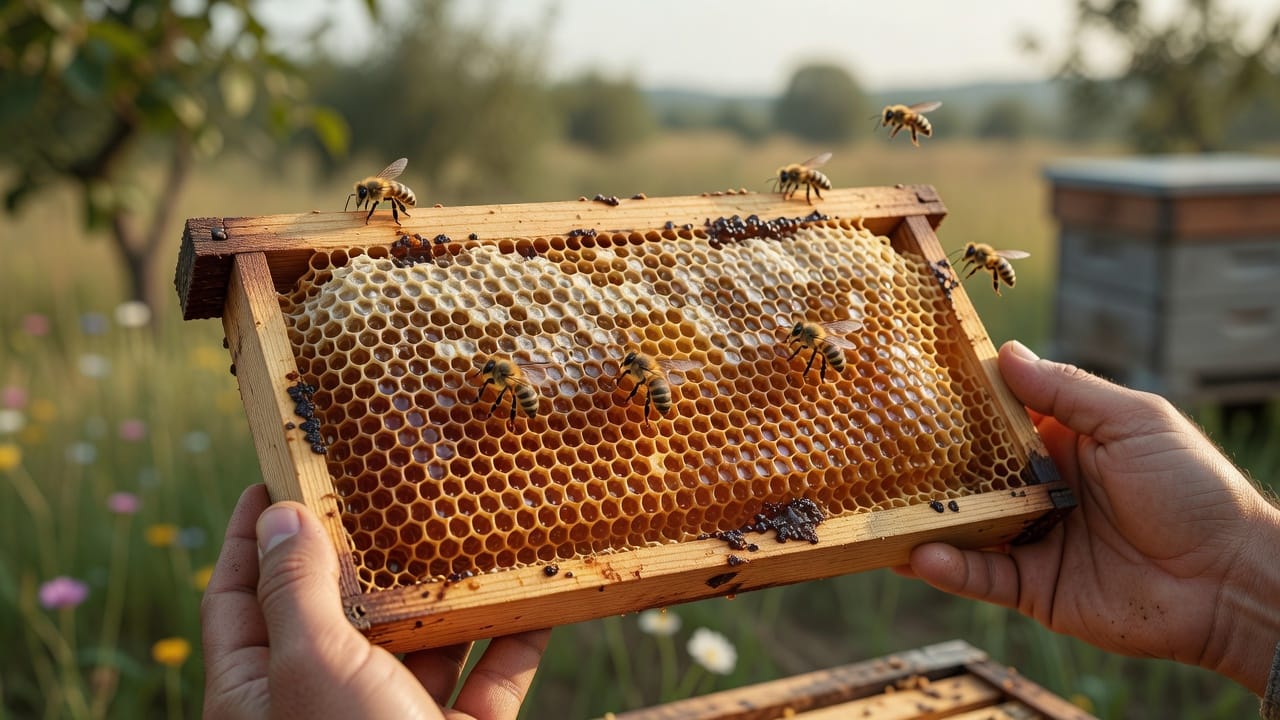
Honeybees do not scatter their defences. They lay them out like an immune system.
Honey kills bacteria. So does propolis, the plant resin bees smear on the walls. So does fermented pollen. None of that was news. The news is the floor plan.
Kenya Fernandes and colleagues at the University of Sydney sampled 24 colonies at five apiaries in New South Wales. Honey, propolis, pollen, wax, nurse bees, foragers. They sequenced the bacteria and the fungi, tested which material stopped which microbe, and fingerprinted the chemistry. Antimicrobial activity rose from the bees' own bodies toward the centre of the hive. It was strongest against bacteria, including the one that causes American foulbrood, a brood disease that can wipe a colony. It was weaker against fungi. The researchers think the hive may tolerate fungi, because many of them are harmless or useful.
The chemistry splits by material. Honey's punch tracks with hydrogen peroxide, the same molecule in a brown bottle of antiseptic. Propolis tracks with flavonoids, the plant compounds in red wine and green tea. Pollen tracks with the small acids fermentation leaves behind. The brood, and the bee bread the colony eats, sit where that chemistry is strongest.
Fernandes put it without the metaphor doing the work. The hive is a workplace, a restaurant, and a hospital. It is also, on this map, an immune system. The paper is in ISME Communications, published 19 October 2026.
Key Facts
- 24 colonies, five apiaries, New South Wales
- ISME Communications, 19 October 2026, doi 10.1093/ismeco/ycag247
- Lead author: Kenya E. Fernandes, University of Sydney
- Activity rises toward the centre; strongest against bacteria, including American foulbrood
- Honey: hydrogen peroxide. Propolis: flavonoids. Pollen: small polar compounds from fermentation
Why This Matters
Colony losses get told as one villain: a mite, a pesticide, a virus. This paper says the nest is a coordinated defence, and a beekeeper who scrapes out propolis or swaps every comb may be stripping it. That is a management change a shed can make this season, if later trials show the map predicts disease.
What We Don't Know Yet
Whether keeping the layout — propolis at the brood, bee bread left alone — actually cuts foulbrood or any other disease in the field. Twenty-four hives in one Australian state are a map, not a treatment trial. Fungi were not held the way bacteria were. No commercial hive product should be sold off the back of this paper.