Daily Digest — October 19, 2026
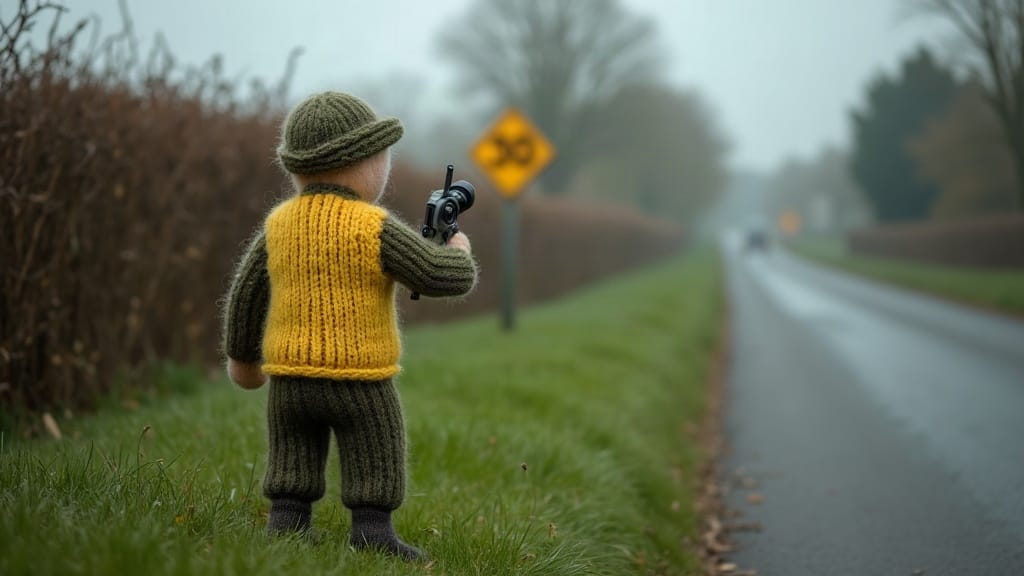
Fillongley knitted an RAF man to slow the cars. He was stolen before breakfast. Antarctic ice cliffs fell faster than the models, then stopped.
Good morning. Here's what's going right.
🌟 Today's Lead
The Woolly Speed Gun
Heather Badham looked for the RAF man and he was gone. The Fillongley Knit and Natter group had stood him beside a Warwickshire lane in a knitted high-vis vest, holding a knitted speed gun, so drivers would think the camera was real. The BBC, on 15 October, said he was taken between 07:10 and 08:05. He was made for the father of one of the knitters, who served in the Second World War. The council has recorded 11 collisions at that junction in four years. The lights are approved. The funding is not confirmed. Brake lights are what Badham saw. They are not a speed survey.
In Brief
🧊 Faster, Then a Stop
Caroline Needell and colleagues measured more than 15,000 Antarctic ice cliffs with NASA's ICESat-2, from 2019 to 2023. The cliffs that collapsed retreated faster than the models. Then they stopped. The watched glaciers stabilised. The paper, in Science on 15 October, does not print a sea-level centimetre, and it does not say West Antarctica is safe.
🦴 Zero New Lesions, and a Rising Infection Count
Pasatru, approved in August for adults with fibrodysplasia ossificans progressiva, showed no new heterotopic bone lesions from week 56 to week 84, against nine on placebo. That zero is a company readout. The 56-week Lancet paper is the journal: 19 lesions on placebo, one and two on the two doses. Skin infections rose with the dose, to 78 percent at 10 mg/kg. All resolved. Patient-reported flares did not move at 56 weeks.
🗺️ The Map Was Short
A Nature paper published on 14 October estimates that 26.81 percent of land was already in some kind of conservation area in 2022, against an official 18.5 percent. Helen O'Neill will not call the 30 percent target nearly finished. Of the extra, 7.38 points are possible sites that are not yet recognised. Grassland and shrubland are still thin. This is not an ocean figure.
📊 Progress by Numbers
- Stolen between 07:10 and 08:05. Eleven collisions at the Fillongley junction in four years. No speed survey.
- More than 15,000 Antarctic ice cliffs. Faster collapse, then a stop. No sea-level centimetre in the paper.
- Zero new bone lesions on Pasatru from week 56 to 84, against nine on placebo. Infections: 78 percent at the higher dose.
- 26.81 percent of land in some conservation area in 2022. 7.38 of those points are not yet recognised.
- One of 16. Nyaradzo Hoto walked to a bank in a new ranger uniform in 2017. Women are an estimated 3 to 11 percent of rangers. That range is from 2021.
Also worth your time
Nyaradzo Auxilia Hoto, of Huyo in Zimbabwe's Lower Zambezi, was one of the first sixteen women recruited to Akashinga. She is now a biodiversity officer. The profile does not print a poaching percentage, and we are not inventing one.
📻 On Today's Episode
Bright Side Daily for 19 October. Rory and Elizabeth. A knitted speed gun, a cliff that fell and stopped, a drug that stopped new bone and raised infections, and a conservation map that was short eight points. The person at the end is Nyaradzo Hoto, on the walk to the bank.
Stories and sources: thebrightside.news
The Bright Side — progress, solutions, and reasons for hope. Every day.