World's First Underwater Desalination Plant Prepares to Launch Off Norway
Flocean One will become the world's first underwater desalination plant, using natural ocean pressure to slash energy costs.
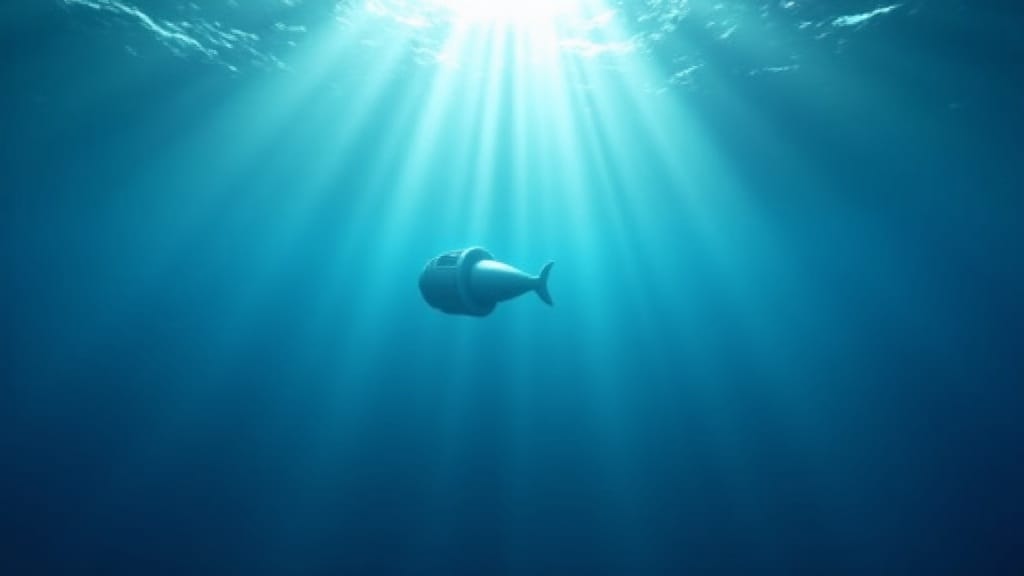
Six hundred metres below the surface of the North Sea, a capsule-sized device is preparing to do something no technology has done before: desalinate seawater on the ocean floor.
Flocean One, developed by Norwegian company Flocean, is scheduled to begin operations in the second half of 2026 off the coast of Mongstad, becoming the world's first fully operational underwater desalination plant.
The concept is elegantly simple. Conventional desalination forces seawater through reverse osmosis membranes at high pressure, consuming enormous amounts of electricity — making it one of the most energy-intensive water treatment methods available. By operating at depth, Flocean One uses the natural hydrostatic pressure of the ocean itself to drive water through the membranes, dramatically reducing the energy required.
The company claims the approach cuts energy consumption by up to 40 to 50% compared to conventional reverse osmosis plants. If validated at commercial scale, that reduction could fundamentally change the economics of desalination — making freshwater production affordable in regions that currently cannot justify the energy costs.
The technology builds on a proof of concept. Flocean's earlier installation, Flocean Zero, has been delivering clean drinkable water from approximately 500 metres below the surface at Mongstad since November 2024. The move to Flocean One represents the transition from demonstration to commercial-scale operation.
Water scarcity affects more than 2 billion people globally, according to the United Nations — a number projected to rise sharply due to climate change, population growth, and groundwater depletion. Desalination is growing rapidly, with the global market expected to exceed $30 billion by 2030, but its energy intensity and environmental footprint have limited adoption in many of the places that need it most.
Norway's role as a pilot site is no accident. The country has extensive offshore engineering expertise from its oil and gas industry, and Mongstad — home to one of Norway's largest oil refineries — has existing subsea infrastructure that can support the trial. It's a fitting transition: technology and expertise developed to extract fossil fuels being repurposed to address one of climate change's most pressing consequences.
If Flocean One's pilot proves the concept works reliably, underwater desalination could find its most impactful applications in water-scarce regions of the Middle East, North Africa, and South Asia — places where conventional desalination is often the only option but where energy costs make it prohibitively expensive.
Key Facts
- First underwater desalination plant, launching H2 2026 off Mongstad, Norway
- Operates at approximately 500–600m depth
- Claims up to 40–50% energy reduction versus conventional reverse osmosis
- More than 2 billion people affected by water scarcity globally (UN)
- Global desalination market projected at $30+ billion by 2030
Why This Matters
Water scarcity is accelerating faster than most climate impacts. By 2030, global freshwater demand is projected to exceed supply by 40%. Desalination is one of the few technologies that can create new freshwater supply rather than simply redistributing existing sources — but only if the energy cost can be brought down.
Flocean's approach attacks the core economic barrier. If underwater desalination can deliver freshwater at 40–50% lower energy costs, it opens the technology to countries and communities that have been priced out. The potential impact for coastal cities across Africa, the Middle East, and South Asia is transformative.
What We Don't Know Yet
The system has not yet operated at full commercial scale. Pilot results from Flocean Zero are encouraging, but the leap to Flocean One's intended capacity remains unproven.
Maintenance and repair at 500–600 metres depth presents significant logistical challenges. Subsea infrastructure requires specialised vessels, remote-operated vehicles, and expertise that is expensive and not widely available.
Brine management at depth is uncharted territory environmentally. Conventional desalination plants discharge hyper-saline brine that can harm marine ecosystems; how this plays out at depth, where ocean currents and ecosystems differ significantly from surface conditions, is unknown.
Cost comparisons with conventional plants are theoretical until operational data are available. The energy savings may be partially offset by higher installation, maintenance, and retrieval costs.
Scalability to the volumes needed for large population centres — millions of litres per day — is unproven at subsea depths.
Sources: Interesting Engineering · Flocean
Published 21 February 2026 · Category: Science & Technology