America's Clean Energy Buildout Hits Record 86 GW in 2026
Latest developments in Environment & Climate
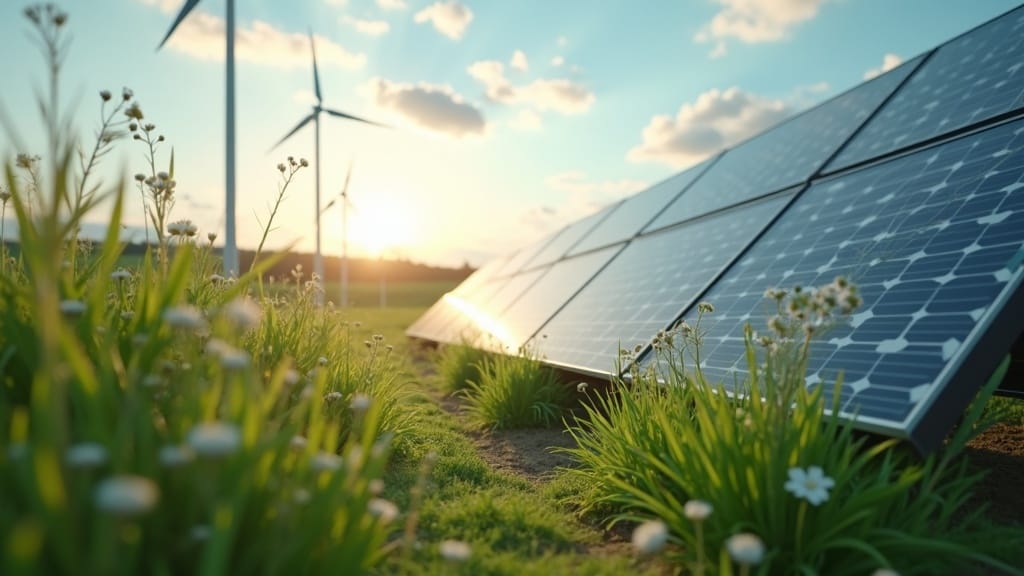
America's Clean Energy Buildout Hits Record 86 GW in 2026
America's renewable energy revolution is accelerating at unprecedented speed, with the U.S. Energy Information Administration projecting a record 86 gigawatts of new clean energy capacity additions in 2026—enough to power roughly 65 million homes. This massive expansion represents a 62% increase from 2025's already-substantial 53 GW, marking the largest single-year buildout of renewable infrastructure in American history.
Solar power and battery storage systems account for the majority of new installations, reflecting dramatic cost reductions and improved technology that have made renewable energy the cheapest electricity source in most U.S. markets. The surge also demonstrates how federal incentives from the Inflation Reduction Act are translating into real infrastructure deployment across the country.
This buildout represents more than impressive statistics—it signals a fundamental shift in how America generates electricity. The 86 GW of new capacity exceeds the total electricity generation of most individual countries and will displace significant fossil fuel generation, reducing both carbon emissions and long-term electricity costs for consumers.
Energy analysts note that this expansion creates a positive feedback cycle: more renewable capacity reduces electricity costs, which encourages further electrification of transportation and heating, which creates demand for even more clean generation. The scale of deployment is also driving American manufacturing of solar panels, wind turbines, and battery systems.
Grid operators emphasize that this rapid expansion requires careful coordination to maintain reliability, but early indicators suggest the combination of renewable generation and storage is actually improving grid stability by providing more distributed and responsive power sources.
Key Facts
- 86 GW projected new capacity in 2026 (62% increase from 2025's 53 GW)
- Solar installations expected to account for ~60% of new capacity
- Battery storage additions projected at record 15 GW
- Total U.S. renewable capacity will exceed 350 GW by end-2026
- New capacity can power approximately 65 million additional homes
- Renewable generation now cheaper than fossil fuels in 95% of U.S. markets
- Source: U.S. Energy Information Administration, February 2026
Why This Matters
This expansion builds on accelerating trends that have transformed American electricity generation over the past decade. In 2015, renewables provided just 13% of U.S. electricity; by 2025, that figure reached 35%, and the 2026 additions will push it toward 45%.
The dramatic scale reflects multiple converging factors: federal tax incentives have reduced project costs by 30-40%, technology improvements have increased efficiency, and state renewable energy mandates have created guaranteed markets. Additionally, corporate buyers increasingly demand clean electricity for their operations, creating stable demand for new projects.
The Inflation Reduction Act, passed in 2022, provided long-term tax credit certainty that enabled developers to plan and finance projects with confidence. This policy stability proved crucial for the complex, multi-year development timelines required for large energy infrastructure.
The geographic distribution also matters: these projects are providing economic development and tax revenue in rural communities across America, often in regions that previously depended on fossil fuel industries.
What We Don't Know Yet
While the buildout is remarkable, challenges remain significant. Grid infrastructure must be upgraded to handle increased renewable generation, particularly transmission lines to connect remote solar and wind resources to population centers. Many projects face delays due to interconnection queues that can stretch 3-5 years.
Weather-dependent renewable generation still requires backup power or storage for reliability. Although battery storage is expanding rapidly, it currently provides only a few hours of backup during peak demand periods. Longer-term energy storage solutions remain expensive and limited in scale.
Manufacturing supply chains face stress from this rapid expansion. Solar panel and battery component supplies experienced shortages in 2025, potentially constraining 2026 deployment if not addressed. Trade tensions and tariff policies could also impact costs and availability of essential equipment.
The projections assume continued federal tax credit support and stable regulatory policies. Changes in government energy priorities could slow future expansion rates.
Sources: Research publications and verified news reports
Published February 23, 2026 · Category: Environment & Climate