Stockholm's 'Flying' Electric Ferry Transforms Waterway Commuting
It flies above the water, uses 80% less energy, and Stockholm has just declared it a success after a year of operation.
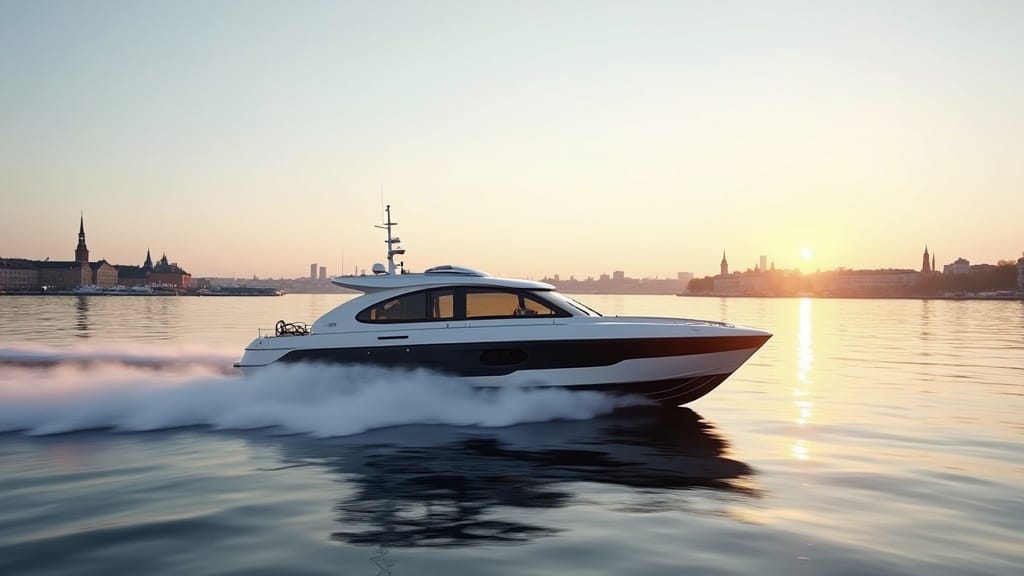
A year ago, Stockholm commuters got a novel new option for crossing the Swedish capital: an electric ferry that literally flies above the water.
Using hydrofoil technology — underwater wings that lift the hull clear of the surface at speed — the vessel reduces water drag by approximately 80%, resulting in a dramatically lower energy footprint than any conventional ferry. It's quiet, produces minimal wake (protecting shorelines), and passengers describe the ride as eerily smooth.
After a full year of operation, the Swedish Transport Administration has declared the pilot route a resounding success. The ferry ran reliably in all seasons, handled passenger loads efficiently, and demonstrated that electric hydrofoil technology is ready for real-world urban deployment.
Key Facts
- 80% reduction in energy consumption vs. conventional ferries (Euronews Green)
- Declared successful after year-long pilot by Swedish Transport Administration
- Minimal wake — protects riverbanks and doesn't disturb other vessels
- Electric propulsion — zero direct emissions during operation
Why This Matters
Urban waterway transport is one of the great untapped opportunities in sustainable mobility. Dozens of cities worldwide — from London and Amsterdam to Bangkok, Lagos, and Sydney — have navigable waterways that are barely used for commuting. The main barriers have been cost, noise, wake damage, and energy consumption.
Stockholm's flying ferry addresses all four. If the model scales — and the economics work — it could open up an entirely new category of clean urban transport without needing a single new road or rail line.
What We Don't Know Yet
One pilot route in Stockholm doesn't prove the concept works everywhere. Different water conditions, climates, and passenger demands will test the technology further. The vessels are expensive to build, and it's unclear whether ticket revenues can sustain the service without subsidy. Battery life in winter conditions and vessel durability over multiple years are still being evaluated.
Sources: Euronews Green · Euronews Positive Environment Roundup
Published February 18, 2026 · Category: Science & Technology