The Brush
A Phase III trial found 38% silver diamine fluoride arrested 54% of toddler cavities at six months, versus 22.5% with placebo. The paper is from July. US cavity use is still off-label, and the liquid stains decay black.
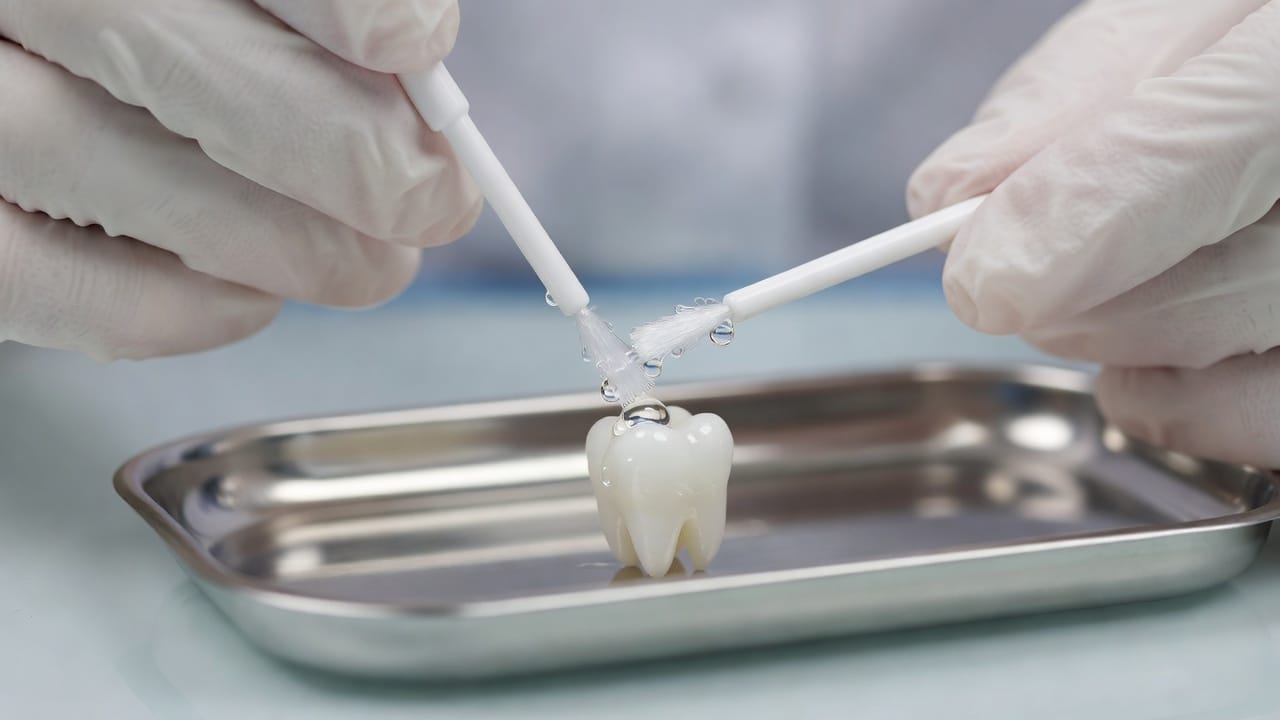
Half the cavities stopped. The paper is from July. The stain is black.
A small brush. No needle. No drill. That is the picture, and it is also the limit of what the trial proved.
Margherita Fontana and colleagues at the University of Michigan led a Phase III trial, published online in JAMA Pediatrics on 27 July 2026. They enrolled 830 children under 6 with severe early childhood caries, through dental offices, paediatric practices, and Head Start programmes in Michigan, New York, and Iowa. Clinicians painted 38% silver diamine fluoride onto cavitated dentin lesions. The comparison was a placebo.
At six months, decay was arrested in 54.0% of lesions treated with the liquid, versus 22.5% with placebo. At three months the rates were 57.5% versus 18.8%. At eight months, 50.2% versus 17.4%. Reported treatment-related adverse events were similar: 47.3% versus 43.3%. The trial is registered as NCT03649659. The product was Advantage Arrest, supplied by Elevate Oral Care.
In the United States the liquid was cleared in 2014 for tooth sensitivity. Using it on cavities, including in children, is still off-label. Amr Moursi, a co-principal investigator at New York University, said the results support FDA approval for managing arrest of decay in young children, and that taking it off off-label status could change payment and product quality. Good News Network, on 27 October, wrote that approval may be imminent. That is a gloss. We have not confirmed that a drug application has been filed.
The liquid stains arrested decay black. On a baby tooth that will fall out, that trade is easier to accept. It does not put back the tooth structure the decay already took. For some children, painting again every few months may be enough until the tooth is gone. It is not a filling.
Every year, untreated decay sends young children to emergency departments that cannot do the dentistry. Some of those children end up in an operating room. The trial is the evidence that a brush can stop a lesion. It is not a licence, and it is not from this week. The coverage is.
Key Facts
- JAMA Pediatrics, published online 27 July 2026. Fontana et al. DOI 10.1001/jamapediatrics.2026.2567
- 830 children under 6, Michigan, New York, and Iowa
- Arrest at 6 months: 54.0% with 38% SDF versus 22.5% placebo
- 3 months: 57.5% versus 18.8%. 8 months: 50.2% versus 17.4%
- Adverse events 47.3% versus 43.3%
- FDA-cleared for sensitivity since 2014. Cavity use remains off-label. Stains decay black
- Trial registration NCT03649659
Why This Matters
The intervention is a few seconds and a brush. The disease is common, and the usual door for a frightened four-year-old is a drill or a general anaesthetic. A July paper does not become an approval because a news site used the word imminent.
What We Don't Know Yet
Whether the manufacturer has filed the application. Whether insurers will pay if it is approved. How often the black stain makes a parent refuse a second coat. Whether the same arrest rate holds in a dental practice that is not in this trial.