Scottish Capercaillie Population Surges 50% Through Forest Restoration
Scottish capercaillie population increases 50% through forest restoration at RSPB Abernethy, offering hope for Britain's most endangered bird.
Scottish Capercaillie Population Surges 50% Through Forest Restoration
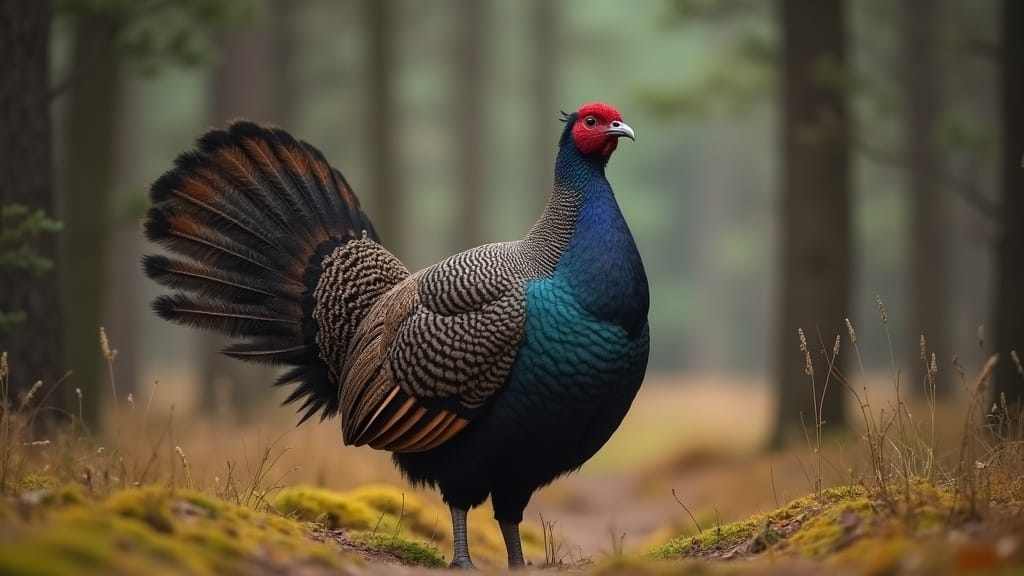
Scotland's capercaillie, the magnificent "horse of the woods" whose dramatic mating displays once filled Highland forests, is making a remarkable comeback. At RSPB Abernethy, the population of displaying males has increased 50% from 20 to 30 since 2020, offering hope for one of Britain's most endangered birds.
The turkey-sized grouse, known for elaborate springtime "leks" where males compete for mates through displays of fanned tails and haunting calls, represents both the challenges and possibilities of Scottish conservation. Once numbering over 20,000 in the 1970s, the species crashed to just 532 individuals by recent counts, making recovery efforts increasingly urgent.
RSPB's success at Abernethy demonstrates that habitat restoration can reverse seemingly irreversible declines. The organisation enhanced native Caledonian pinewood by removing invasive species, managing grazing pressure, and restoring the open forest structure that capercaillie require for ground-nesting and chick-rearing.
The birds need a delicate balance of mature pine trees for roosting and feeding, plus open understory areas where chicks can find insects and escape predators. Industrial forestry practices had eliminated much of this varied habitat, forcing capercaillie into marginal areas where reproduction failed consistently.
The Abernethy success provides a replicable model for other Scottish forests, though conservationists emphasise that capercaillie recovery requires landscape-scale thinking rather than isolated reserve management. The species' large territory requirements mean individual sites can only support limited numbers.
Key Facts
- 50% population increase at RSPB Abernethy (20 to 30 males, 2020-2025)
- Total Scottish population estimated at 532 individuals (2023 survey)
- Males can reach 4kg weight with 90cm wingspan
- Historical population exceeded 20,000 in 1970s
- Habitat restoration covers 12,800 hectares at Abernethy
Why This Matters
Capercaillie disappeared from Scotland in 1785 due to deforestation and hunting, returning only through Victorian reintroduction programs using Scandinavian birds. The species thrived until modern forestry practices again reduced suitable habitat, while climate change has shortened Highland winters that capercaillie depend on for pine needle feeding.
The birds serve as indicators of forest ecosystem health, requiring the complex structure and biodiversity that benefits numerous other species. Their recovery signals broader restoration of Scotland's ancient woodlands, which once covered much of the Highlands before centuries of clearance for sheep farming and timber extraction.
What We Don't Know Yet
The population remains critically small and vulnerable to sudden declines from disease, harsh weather, or disturbance. Climate change may continue altering Highland conditions in ways that favour competitors over capercaillie. The species is notoriously sensitive to human disturbance, particularly during breeding season, creating ongoing management challenges as outdoor recreation increases.
Published February 24, 2026 · Category: Environment & Climate