The Paradox of the Parasite: Salmon Health Signals Ocean Recovery
Rising parasite levels in canned salmon may actually be a sign that marine food webs are reconnecting.
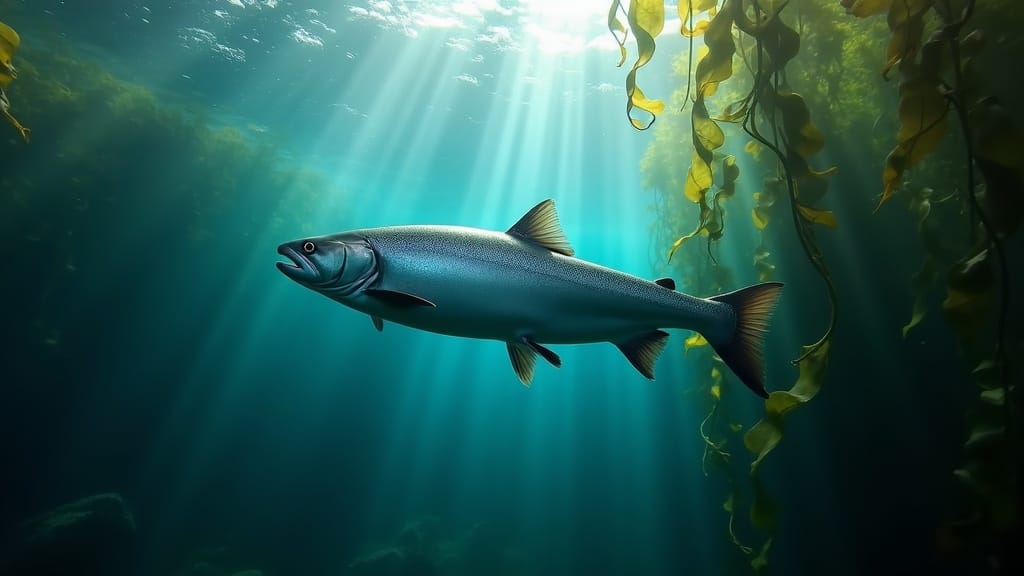
The Paradox of the Parasite: Salmon Health Signals Ocean Recovery
In ecology, a "pest" is often a sign of health. Recent findings show that parasite counts in canned pink and chum salmon are on the rise—and scientists believe this is actually good news.
The presence of these parasites suggests that the salmon are interacting more naturally with a complex, multi-layered ocean food web. In a degraded ecosystem, these biological interactions are severed; in a recovering one, the "parasite-host" relationship returns as a sign of a functioning, balanced environment.
While not the most intuitive "positive" story, it highlights a fundamental truth about nature: a healthy ecosystem is a messy one. The return of these biological interactions suggests that marine resilience is returning to the global oceans.
Key Facts
- Observation: Increased parasite counts in canned pink and chum salmon [Earth.com].
- Interpretation: This is viewed as a signal of reconnecting ocean food webs [Earth.com].
Why This Matters
Overfishing and climate change have simplified ocean food webs, removing key links. When those links return, the "side effects"—including parasites—also return. This paradoxical indicator is a reminder that human definitions of "clean" or "pure" often clash with biological definitions of "healthy."
What We Don't Know Yet
This is an interpretative signal, not a direct measurement of biomass. We must be careful not to overstate this as a "cure" for the oceans, but rather a symptom of recovery in specific trophic levels. The overall health of the salmon populations themselves must still be monitored.
Sources: Earth.com
Published 2026-05-06 · Category: Environment & Climate