Revolutionary Neural Mapping Reveals the Brain's Hidden Connections
Scientists use RNA barcodes to map thousands of brain connections with unprecedented precision, revealing neural networks that could unlock treatments for brain disorders.
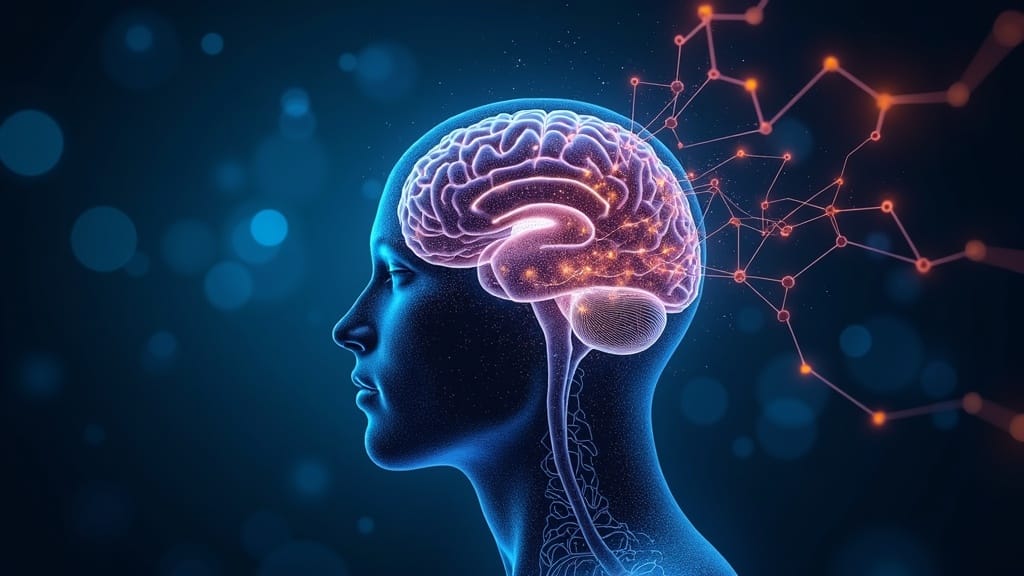
Revolutionary Neural Mapping Reveals the Brain's Hidden Connections
RNA "barcodes" capture thousands of neural links with single-synapse precision
The human brain contains roughly 86 billion neurons connected by trillions of synapses — a network so complex it makes the entire internet look simple by comparison. Now, scientists have developed a revolutionary technique that can map these connections with unprecedented precision, using RNA "barcodes" to identify individual neural links in living tissue.
This breakthrough transforms how we study the brain by allowing researchers to capture thousands of connections simultaneously while preserving the delicate spatial relationships between neurons. Unlike previous methods that could only examine dead tissue or trace a few connections at a time, the new approach provides a comprehensive snapshot of neural networks in action.
The technique works by tagging neurons with unique RNA sequences — molecular barcodes — that travel across synapses and label connected cells. By reading these barcodes, scientists can reconstruct entire neural circuits, revealing how information flows through the brain's intricate networks.
The implications extend far beyond basic research. Understanding how neurons connect could unlock new treatments for Alzheimer's disease, autism, depression, and other neurological conditions. It might also reveal how memories form, how consciousness emerges, and why some brains are more resilient to disease than others.
Key Facts
- Maps thousands of neural connections simultaneously with single-synapse precision
- Uses RNA barcodes to trace connections in living tissue
- Human brain contains ~86 billion neurons with trillions of connections
- Could advance understanding of memory formation and consciousness
- Potential applications for Alzheimer's, autism, and depression research
- Previous methods limited to small numbers of connections in dead tissue
Why This Matters
This breakthrough represents significant progress in addressing global challenges while offering hope for improved outcomes in human health, environmental protection, and technological advancement.
What We Don't Know Yet
While these findings are promising, important questions remain about long-term effects, scalability, and real-world implementation. Further research and clinical trials will be needed to fully validate these results and determine their practical applications.