One Drip, No Number Yet
Prime Medicine dosed the first person with an in-body prime-editing infusion for Wilson disease. No efficacy result is public. Data are expected in 2027.
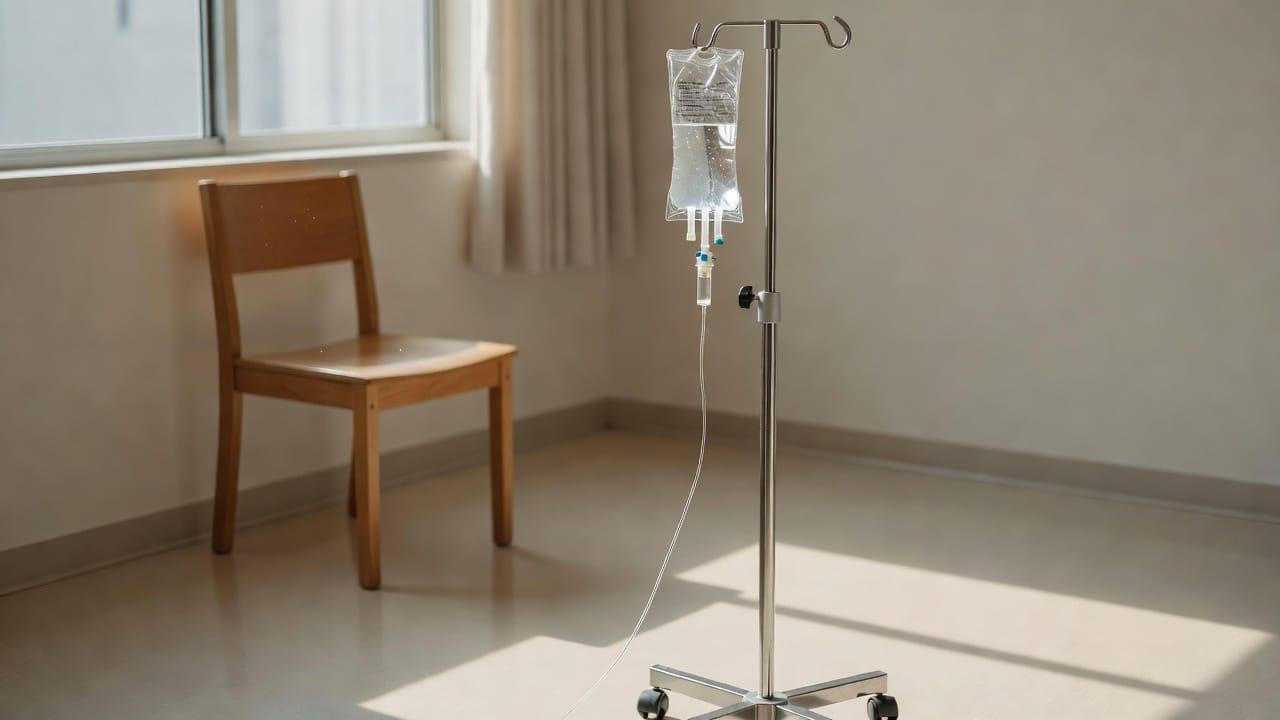
Prime editing was given inside a patient. The copper result is a year away.
Prime editing rewrites a chosen DNA change without the full double-strand cut of standard CRISPR-Cas9. Prime Medicine said it had dosed the first person in a phase 1/2 trial of PM577a, a one-time intravenous infusion for Wilson disease. Lipid nanoparticles carry the editor to liver cells. The target is H1069Q, the most common Wilson mutation in North America and Europe, in the gene ATP7B. Wilson disease stops the body clearing copper. About 1 in 30,000 people have it.
Nature reported the dosing on 22 October 2026 as the first known use of prime editing to alter DNA directly inside a person's body. Secondary reports put the date of the infusion at 5 October. An earlier Prime Medicine trial edited blood stem cells outside the body, in two people with a rare immune disorder, and put the cells back. This one does not take the cells out.
Rhonda Rowland, president of the Wilson Disease Association, told Nature she had not expected to see the technique tried in her lifetime. First results are expected in 2027. There is no copper number, and no safety table, in public.
Key Facts
- PM577a, one intravenous infusion, in vivo prime editing
- Target: H1069Q in ATP7B
- First patient dosed in early October 2026
- Phase 1/2, open label, adults and adolescents with at least one H1069Q copy
- Results expected in 2027
- Nature, 22 October 2026
Why This Matters
If the edit lands in liver cells and the copper falls, the same infusion can be mixed for the next person with the same mutation. That is a different factory from taking each patient's cells out, editing them, and putting them back. The factory is not open. One drip is the start of the trial, not the end.
What We Don't Know Yet
Whether the edit worked in this person. Dose, safety, and copper levels are unpublished. No gene-editing therapy is yet approved for use inside the body. One patient is not a treatment.