Hybrid Perovskite Solar Cells Reach 34% Efficiency
Tandem perovskite-silicon solar cells have reached 34% efficiency, a major improvement over commercial panels, with first products expected in 2026.
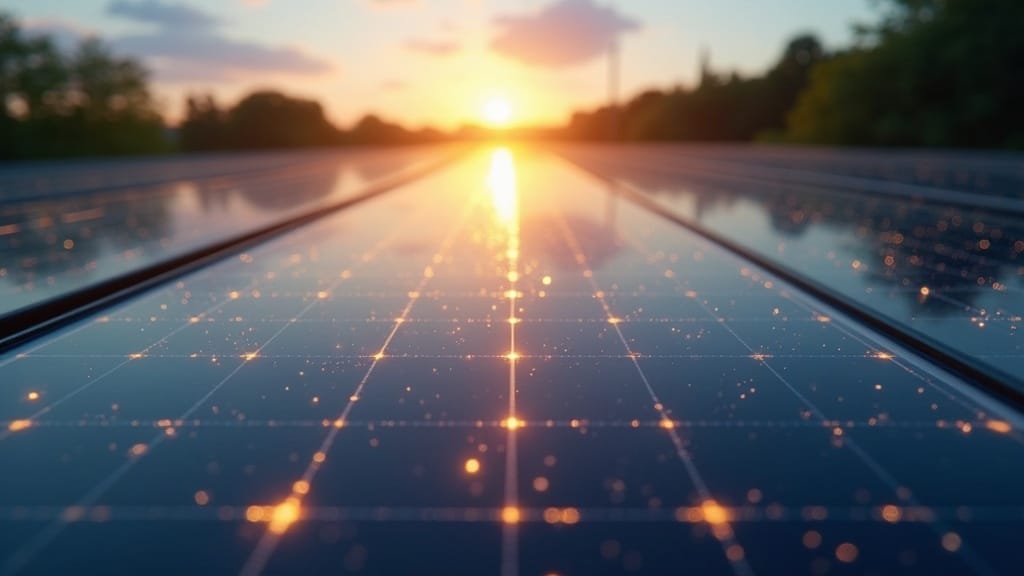
Solar panels are about to get a massive upgrade. Tandem perovskite-silicon solar cells have achieved power conversion efficiencies exceeding 34%, a significant leap over existing commercial silicon panels at approximately 24%. These breakthroughs come from advances in interface passivation and compositional tuning — technical achievements that are now translating toward commercial products.
The implications extend beyond efficiency numbers. Higher efficiency means more energy generation per square meter, making solar viable in space-constrained environments where it previously wasn't economical — smaller rooftops, vehicle-integrated panels, and urban installations. First commercial versions are expected to reach the market in 2026.
Importantly, this technology builds upon existing silicon infrastructure, enabling faster commercialization than technologies requiring entirely new manufacturing processes. The solar industry has a history of absorbing innovations rapidly once they reach market viability.
Key Facts
- Tandem perovskite-silicon cells: >34% efficiency - Commercial silicon panels: ~24% efficiency - ~42% relative improvement in energy conversion - First commercial versions expected: 2026 - Source: Nature Photonics, CAS Insights
Why This Matters
Perovskite solar cells have been a research darling for a decade, promising high efficiency at low cost. The challenge has been stability — early perovskites degraded rapidly. Recent breakthroughs in materials science have solved many of these durability issues, bringing the technology to commercial readiness.
What We Don't Know Yet
- Laboratory efficiency doesn't always translate to real-world performance - Long-term durability in field conditions still being validated - Manufacturing scale-up challenges remain - Perovskite materials may face supply chain constraints - Initial commercial products likely to be premium-priced