NYU Langone Introduces QR Code Innovation for Personalized Patient Education
Simple technology transforms doctor-patient communication with instant access to tailored information
NYU Langone Introduces QR Code Innovation for Personalized Patient Education
Simple technology transforms doctor-patient communication with instant access to tailored information
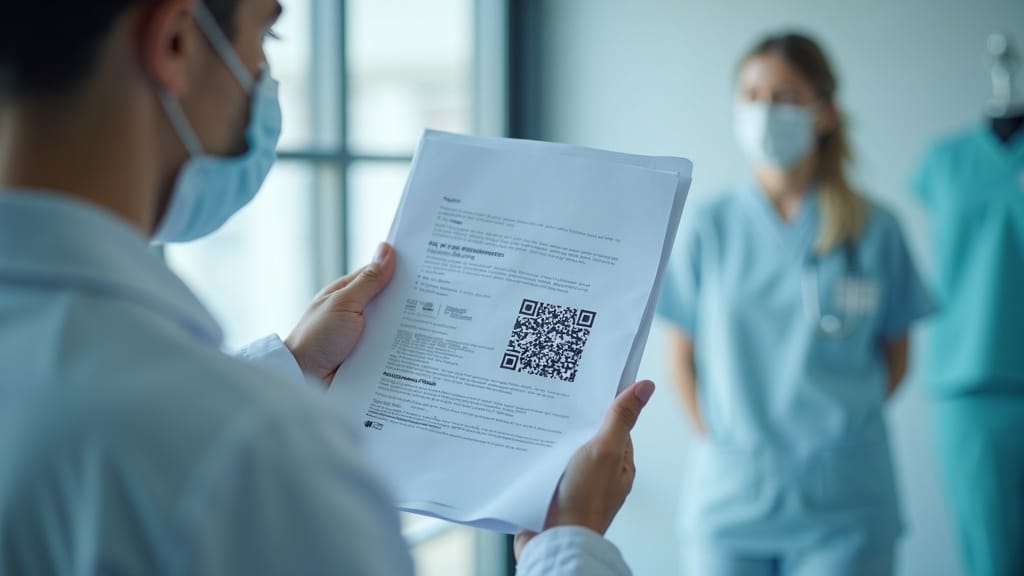
Sometimes the most powerful innovations are the simplest ones. NYU Langone orthopedic surgeons have developed a QR code system that gives patients instant access to personalized education materials during clinical visits, dramatically improving patient engagement and understanding of post-surgical care.
The system allows doctors to generate QR codes linked to educational content specific to each patient condition and treatment plan. Instead of generic pamphlets or trying to remember complex verbal instructions, patients can scan the code with their smartphones and access detailed, personalized information about their care.
This represents a significant advance in healthcare communication, addressing the well-documented problem that patients often forget or misunderstand critical care instructions after leaving the doctor office. Studies show that patients retain only 10-20% of what physicians tell them during appointments.
The beauty of the QR code approach is its accessibility and immediacy. Patients receive the information when they need it most — during the appointment when they can ask questions — but can also access it later when following care instructions at home.
Key Facts
- Developed by NYU Langone orthopedic surgeons
- Provides instant access to personalized patient education materials
- Addresses problem that patients retain only 10-20% of appointment information
- Uses QR codes linked to condition-specific and treatment-specific content
- Presented at AAOS 2026 conference
Why This Matters
Healthcare communication has long struggled with information retention problems. Traditional approaches — verbal instructions, generic pamphlets, written notes — all have significant limitations. Verbal information is easily forgotten, pamphlets are often too general, and handwritten notes can be unclear or incomplete.
Digital health solutions have emerged as promising alternatives, but many are complex or require special apps. The QR code approach leverages technology that patients already have with a scanning process that requires no special software or training.
What We Don't Know Yet
The system assumes patients have smartphones and are comfortable using QR codes, which may exclude some populations, particularly older patients or those with limited technology access. The effectiveness will depend on the quality of the educational content and how well it is tailored to individual patients.
We do not yet have outcome data showing whether this improves treatment adherence or patient satisfaction compared to traditional educational methods.
Sources: Research institutions and academic publications
Published March 03, 2026 · Category: Health & Medicine