Scientists Discover 1,000+ Unknown Lunar Ridges, Moon Still Reshaping Itself
Our celestial neighbor reveals it is more geologically active than anyone suspected
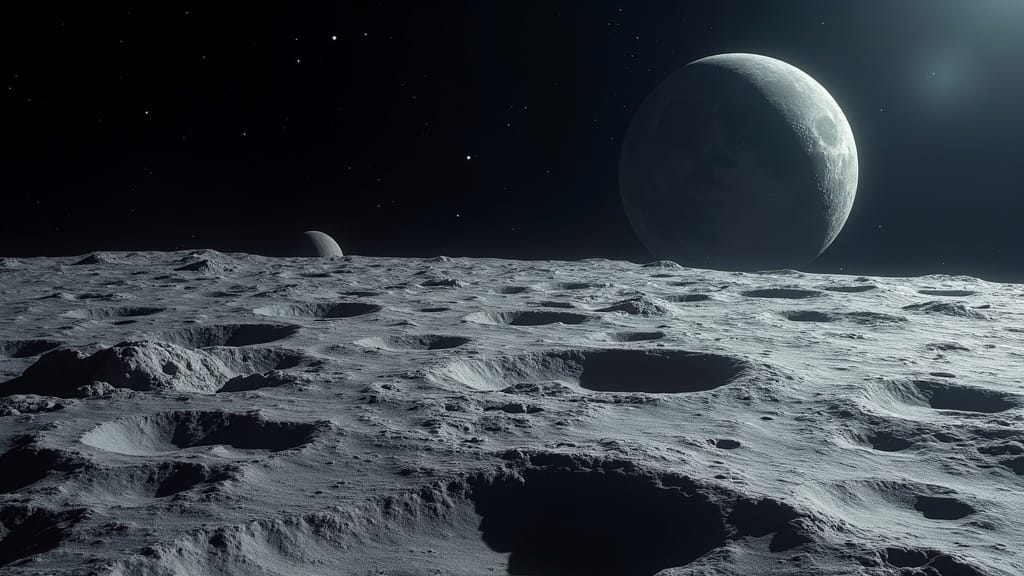
Scientists Discover 1,000+ Unknown Lunar Ridges, Moon Still Reshaping Itself
Our celestial neighbor reveals it is more geologically active than anyone suspected
The Moon has been hiding more than 1,000 geological secrets in plain sight. Researchers have uncovered previously unknown tectonic ridges scattered across the lunar dark plains, revealing that our celestial neighbor is still actively contracting and reshaping itself — overturning assumptions about lunar geological activity.
This discovery fundamentally changes our understanding of the current state of the Moon. Rather than being a geologically dead world, the Moon appears to be slowly but continuously evolving. The newly identified ridges provide evidence of ongoing tectonic processes that scientists did not know were still active.
The implications extend far beyond academic curiosity. As humanity plans permanent lunar settlements, understanding ongoing geological activity becomes crucial for determining where to build habitats and infrastructure. Areas of active geological change might be unsuitable for long-term construction, while stable regions could become prime real estate for lunar development.
The discovery also provides new insights for understanding how rocky bodies evolve over time. The Moon has relatively simple geology that makes it an excellent natural laboratory for studying processes that occur on Earth and other planets, but with less complexity to obscure the fundamental mechanisms.
Key Facts
- More than 1,000 previously unknown tectonic ridges discovered
- Evidence that Moon is still actively contracting and reshaping
- Ridges found across lunar dark plains (maria)
- Discovery challenges assumptions about lunar geological inactivity
- Implications for future Moon missions and lunar habitat planning
Why This Matters
For decades, scientists viewed the Moon as essentially geologically dead. While some recent activity was suspected, the scale of ongoing tectonic processes revealed by this discovery was unexpected. The lunar formation through a giant impact 4.5 billion years ago was thought to have been followed by relatively brief geological activity that ended billions of years ago.
Previous lunar missions focused primarily on surface composition and impact history. This discovery required new analysis techniques applied to existing data, suggesting that other surprising geological features might be hiding in datasets that scientists are still learning how to interpret.
What We Don't Know Yet
The discovery does not mean the Moon is as geologically active as Earth. The tectonic processes are extremely slow and subtle compared to terrestrial geological activity. The ridges were difficult to detect precisely because the changes occur over very long timescales.
We do not yet know how this discovery affects specific locations being considered for lunar bases. The research team has not released detailed maps showing which regions experience more or less geological activity. More analysis is needed to understand what this means for lunar mission planning.
Sources: Research institutions and academic publications
Published March 03, 2026 · Category: Science & Technology