The Trench
Volunteers on the Scottish island of Lismore uncovered the monastery of Lios Mòr, with graves dated 650 to 1040 and more than 1,000 pieces of precious-metalworking debris. The dig was community-funded.
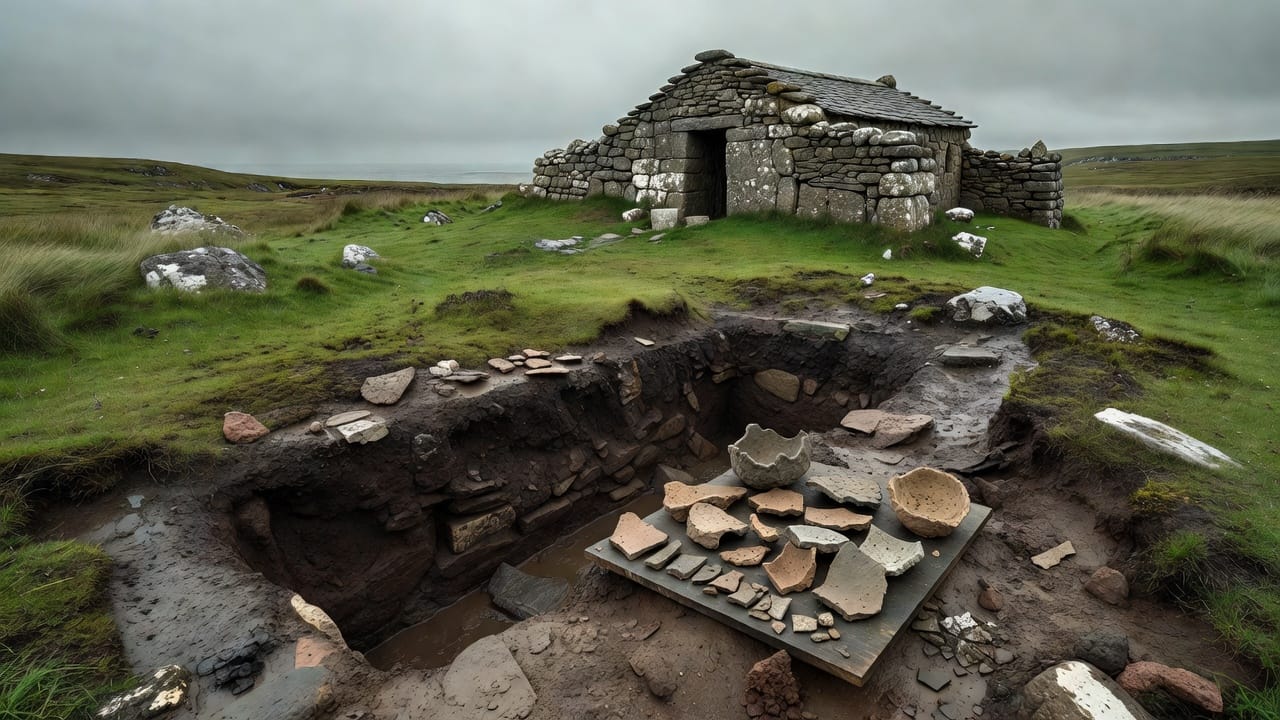
The island paid for the dig. The gold was in the third trench.
The Lismore Historical Society, on an island of about 170 people, crowdfunded a dig beside the 13th-century parish church. Clare Ellis of Argyll Archaeology led it. The question was whether that church sits on the monastery of Lios Mòr, founded by Saint Mo Luóc in the sixth century. Until this dig, the monastery was a text, a place name, and a broken granite cross.
The trenches found at least six burials, radiocarbon dated between 650 and 1040, and fragments of carved crosses. They found an oval stone building about 8 metres across, with a paved floor, dated to the seventh to tenth centuries. A third trench produced more than 1,000 pieces of metalworking debris, including moulds and crucibles used to melt copper, silver, and gold. Gordon Noble of the University of Aberdeen, senior author of the Antiquity paper, called that craft evidence unusual for a monastery.
Antiquity's news line, on 1 October, is that this was a high-ranking ecclesiastical centre, not a small island church. Good News Network ran the story on 26 October. That feature is why it is in this week's file. It is not a new dig. A local claim that Lismore was "equal to Iona" is the society's pride, not a measured ranking.
Key Facts
- Community-funded excavation; island population about 170
- Led by Clare Ellis, Argyll Archaeology
- Senior author Gordon Noble, University of Aberdeen
- Six burials dated 650 to 1040
- Oval building about 8 metres across
- More than 1,000 pieces of precious-metalworking debris
- Published in Antiquity, October 2026
Why This Matters
The island paid for the trench. The trench answered a question the texts had left open. The picture is a crucible, not a cathedral drawing.
What We Don't Know Yet
The full extent of the monastery. Whether "international importance" is the journal's phrase or the society's. The paper is three weeks old. The GNN piece is the new distribution, not a new finding.