Hidden Lava Tunnels on Moon and Mars Could Shelter Future Human Explorers
Nature provides ready-made space habitats, dramatically reducing settlement costs
Hidden Lava Tunnels on Moon and Mars Could Shelter Future Human Explorers
Nature provides ready-made space habitats, dramatically reducing settlement costs
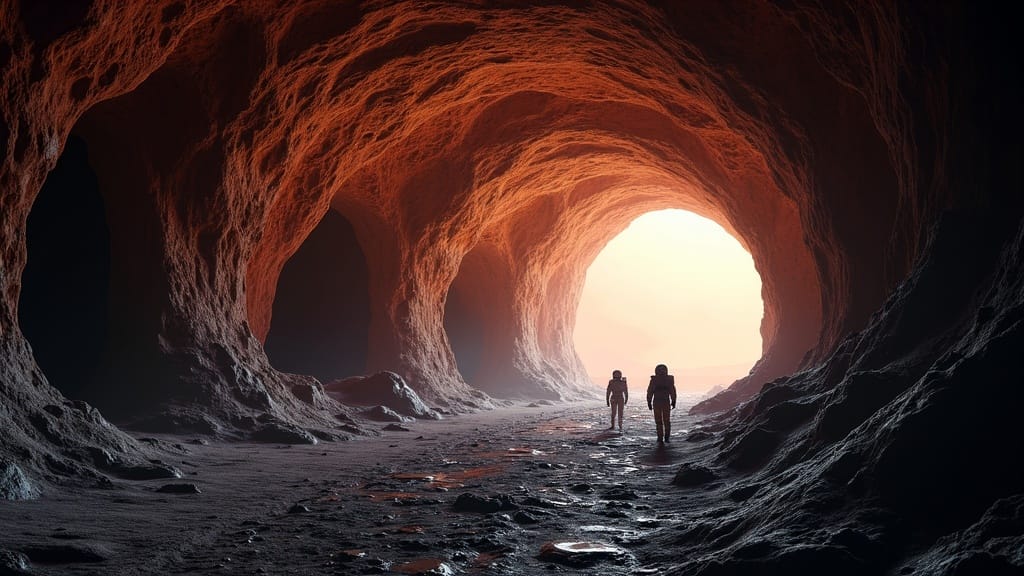
Space expansion just got a major boost from an unexpected source: ancient volcanic activity. Scientists have identified natural lava tunnels on both the Moon and Mars that could serve as ready-made shelters for future human explorers, potentially saving billions in construction costs and dramatically accelerating settlement timelines.
These underground spaces offer protection from the two biggest challenges facing space settlements: deadly radiation and impacts from space debris. Rather than building expensive habitats from scratch or transporting heavy shielding materials from Earth, future missions could simply move into spaces that nature has already created and tested over millions of years.
The discovery represents a fundamental shift in how we think about space settlement. Instead of viewing other worlds as hostile environments requiring complete artificial habitats, we can now consider them as having natural infrastructure that humans can adapt and improve.
For Moon missions planned in the next decade, these lava tubes could provide immediate shelter while longer-term facilities are constructed. For eventual Mars settlements, they could serve as the foundation for entire underground cities.
Key Facts
- Lava tunnels identified on both Moon and Mars
- Natural protection from radiation and space debris impacts
- Could dramatically reduce space habitat construction costs
- Alternative to transporting heavy shielding materials from Earth
- Applicable to missions planned within the next decade
Why This Matters
One of the biggest challenges in space exploration has always been life support and radiation protection. The International Space Station requires constant resupply missions partly because it lacks the mass needed for long-term radiation shielding. Current Mars mission plans involve either accepting dangerous radiation exposure or carrying massive shielding equipment.
Lava tubes form when molten rock creates underground channels that later empty, leaving behind tunnel-like caverns. These structures are known to exist on Earth and have now been confirmed on other worlds through orbital imagery and ground-penetrating radar.
What We Don't Know Yet
We do not yet know the internal condition of these lava tubes. Some may have collapsed, contain dangerous gases, or require significant modification before human habitation. Accessing them could require specialized equipment not currently planned for early missions.
The tubes would need life support systems, emergency exits, and communication links to the surface — major engineering challenges even with natural shelter available.
Sources: Research institutions and academic publications
Published March 03, 2026 · Category: Science & Technology