IEA Reports Record 800 GW of Renewable Capacity Added in 2025
The IEA reports a record 800 gigawatts of renewable capacity was added globally in 2025, with solar contributing 75% of new installations.
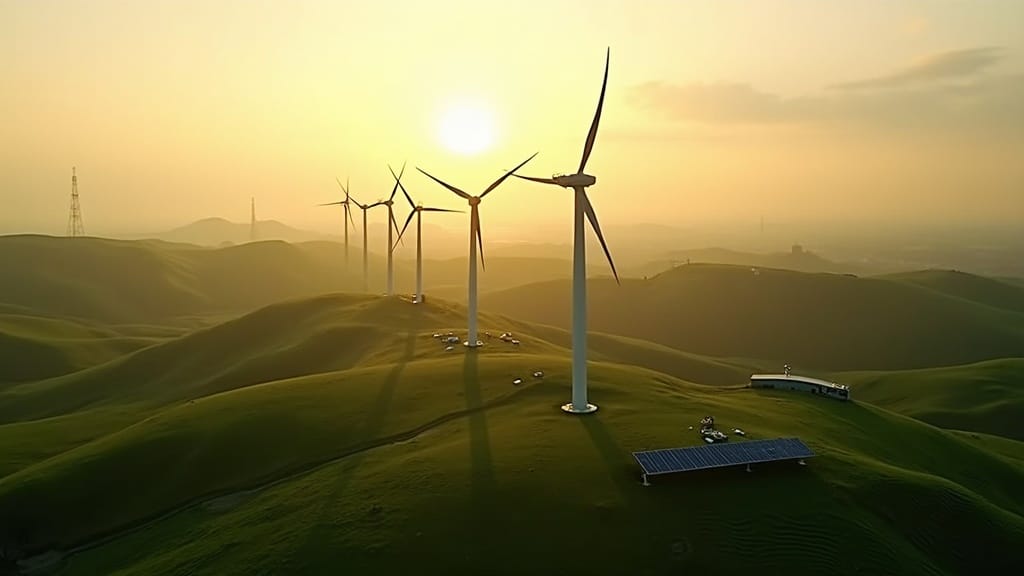
The International Energy Agency reported that annual global renewable capacity additions rose to a record 800 gigawatts in 2025, with solar contributing 75% of this growth. Battery storage was the fastest-growing power technology, with capacity additions rising by approximately 40% to reach almost 110 GW.
These numbers represent more than statistical milestones—they indicate a structural shift in the global energy system. The scale of renewable deployment is now sufficient to meet all new electricity demand globally, meaning clean energy is not just supplementing but replacing fossil fuel infrastructure.
The battery storage surge is particularly significant, addressing the intermittency challenge that has long been cited as a barrier to renewable dominance. With 110 GW of new storage capacity, grids can increasingly balance variable solar and wind generation.
Key Facts
- 800 GW of renewable capacity added globally in 2025 (record)
- Solar contributed 75% of new renewable capacity
- Battery storage additions: ~110 GW (40% growth)
- Source: IEA Global Energy Review 2026
Why This Matters
The 800 GW figure represents years of compounding growth in renewable deployment. What began as subsidized niche installations has become the default choice for new power generation based on economics alone. The IEA has repeatedly revised its renewable forecasts upward as deployment consistently exceeds projections.
Battery storage's emergence as the fastest-growing technology reflects maturing economics and policy support. Storage transforms renewables from intermittent sources to dispatchable resources, fundamentally changing their grid value proposition.
What We Don't Know Yet
Capacity figures don't reflect actual generation—solar panels don't produce at full capacity 24/7. The 800 GW addition represents nameplate capacity, not reliable baseload equivalent. Manufacturing capacity constraints and supply chain dependencies (particularly on China) create vulnerabilities. Grid integration challenges increase as renewable penetration rises, requiring infrastructure investments not captured in capacity figures.
Category: Environment & Climate
Published: April 22, 2026