From the Brink Back: Green Sea Turtles Make Historic Recovery from Near-Extinction
Green sea turtles recover from near-extinction with 28% population increase. IUCN reclassifies species from endangered to least concern in conservation success story.
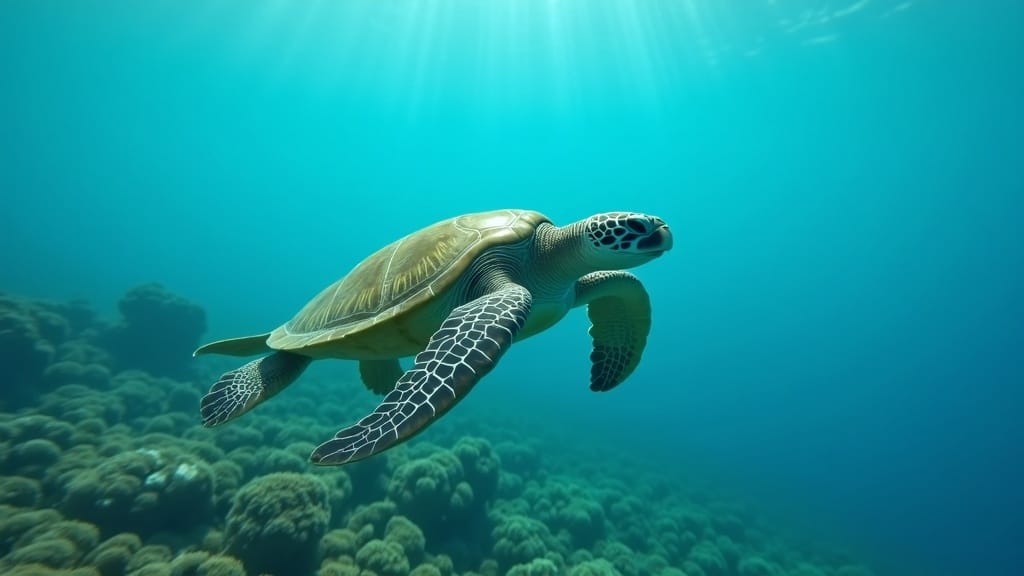
From the Brink Back: Green Sea Turtles Make Historic Recovery from Near-Extinction
In the 1970s and 80s, green sea turtles were disappearing from oceans worldwide. Decades of hunting, egg collection, and coastal development had driven populations to catastrophic lows. Marine biologists feared one of the ocean's most ancient navigators might be sailing toward extinction.
Today, the International Union for Conservation of Nature has delivered remarkable news: green sea turtles have recovered so successfully that they've been reclassified from "endangered" to "least concern" on the global Red List. Populations have increased 28% compared to their lowest recorded levels, representing one of conservation's greatest comeback stories.
The recovery required unprecedented international cooperation across the Pacific, Atlantic, and Indian Oceans. Nesting beaches from Costa Rica to Cyprus received protection. Fishing fleets adopted turtle-excluding devices in their nets. Local communities that once harvested eggs became their guardians, earning income from eco-tourism instead.
Perhaps most remarkably, the effort succeeded across a species that takes 15-30 years to reach breeding age and migrates thousands of miles between feeding and nesting areas. Green turtles born in the darkest conservation years are only now contributing to recovery numbers, suggesting the best may be yet to come.
Key Facts
- Green sea turtle populations up 28% from 1970s-80s lows
- Species reclassified from "endangered" to "least concern" by IUCN
- Previous decline of 48-67% reversed through international cooperation
- Recovery spans Pacific, Atlantic, and Indian Ocean populations
- Turtles take 15-30 years to reach breeding maturity
- Source: IUCN Red List 2025 assessment
Why This Matters
Green sea turtles faced a perfect storm of threats in the mid-20th century. Their meat was considered a delicacy, their shells valuable for crafts, and their eggs harvested for food. Coastal development destroyed nesting beaches while fishing gear caused accidental deaths. Climate change began warming beaches, skewing sex ratios of temperature-dependent hatchlings.
The recovery required addressing threats across entire ocean basins and multiple life stages. International agreements like CITES restricted trade, while regional partnerships protected migration corridors. The success demonstrates what marine conservation can achieve when nations coordinate efforts across shared species.
What We Don't Know Yet
"Least concern" doesn't mean green turtles are completely safe. Climate change continues threatening nesting beaches through sea level rise and temperature changes. Plastic pollution and fishing gear still cause deaths. Regional populations remain vulnerable even as global numbers improve.
The 28% increase represents recovery from historical lows, not return to pre-exploitation levels. True population baselines from centuries past remain unknown, making it difficult to assess how complete the recovery truly is.
Sources: IUCN Red List · Sea Turtle Conservancy
Published February 28, 2026 · Category: Environment & Climate