European Bison Roam the Carpathians Again After a Century
Wild European bison roam Romania's Carpathians for the first time in 100 years. A Science study shows they're restoring the ecosystems they walk through.
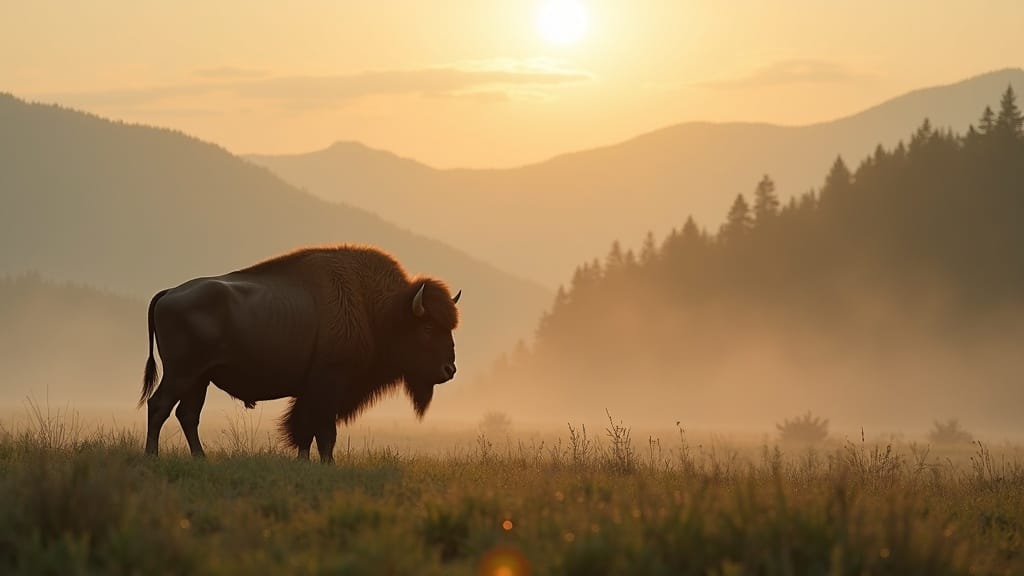
Wild European bison are once again roaming the southern Carpathian Mountains of Romania, a century after the species was hunted to extinction in the wild across most of Europe.
The return is the result of Rewilding Europe's long-running reintroduction programme, which has worked with local communities, conservation bodies, and the Romanian government to release captive-bred bison into carefully prepared habitat. It's one of the continent's most ambitious rewilding stories — and the science is now showing it's working.
A 2025 study published in Science demonstrated that bison migration corridors show measurably restored soil microbe density and nitrogen content. The animals are functioning as ecosystem engineers, literally improving the land they walk on. Their grazing creates habitat mosaics — patches of short grass, tall grass, bare soil, and scrub — that benefit dozens of other species, from insects to birds.
Every European bison alive today descends from just 12 captive individuals. From that genetic bottleneck, the global population has grown to over 9,000 — a testament to decades of careful breeding and, increasingly, wild reintroduction.
Local communities are not just tolerating the bison — they're benefiting. Ecotourism linked to bison watching is generating income in some of Romania's poorest rural areas, in the Țarcu and Poiana Ruscă Mountains. It's creating an economic incentive for ongoing conservation that purely moral arguments never could.
Key Facts
- European bison were extinct in the wild by the 1920s; all living bison descend from 12 captive individuals (IUCN)
- Rewilding Europe has released over 100 bison in Romania's southern Carpathians since 2014
- 2025 Science study: bison corridors show increased soil nitrogen and microbial diversity
- Global European bison population now exceeds 9,000 (up from ~50 in the 1920s)
- Ecotourism revenue contributing to local economies in Țarcu and Poiana Ruscă Mountains
Why This Matters
The European bison (Bison bonasus) is the continent's largest land mammal and was once widespread from the Atlantic to the Urals. Its near-extinction and recovery is one of conservation's most dramatic arcs.
But this isn't just a feel-good wildlife story. The Science study provides hard evidence that large herbivore reintroduction delivers measurable ecosystem services — soil restoration, biodiversity enhancement, carbon sequestration through improved grassland health. It's the kind of data that turns rewilding from a romantic ideal into an evidence-based land management strategy.
Romania's Carpathians offer some of Europe's largest remaining wilderness areas. If bison reintroduction works here, the model can be replicated across the continent's many degraded landscapes.
What We Don't Know Yet
Genetic diversity remains critically low. All living European bison descend from 12 founders, making the population vulnerable to disease and inbreeding depression. Genetic rescue strategies are being explored but aren't yet implemented at scale.
Human-wildlife conflict is a real risk as populations grow. Bison can damage crops and fences, and road safety is a concern. So far, coexistence has been managed, but it will be tested as herds expand.
Ecotourism income is real but modest. Whether it can sustain conservation long-term, or whether it's a supplement that depends on continued external funding, remains to be seen.
Romania faces competing land-use pressures — illegal logging, agricultural expansion — that could undermine rewilding gains. The bison's future depends not just on conservation biology but on political will.
The Science study on ecosystem impact, while rigorous, is a single study. More longitudinal data across multiple sites is needed to confirm the pattern.
Sources: Rewilding Europe · Science · IUCN
Published 16 February 2026 · Category: Environment & Climate