US renewable capacity is on a path to pass natural gas within a year
US renewable electricity generation rose 10.2 percent in the first eight months of 2026. EIA figures put renewable capacity on track to pass natural gas within a year. Capacity is not generation.
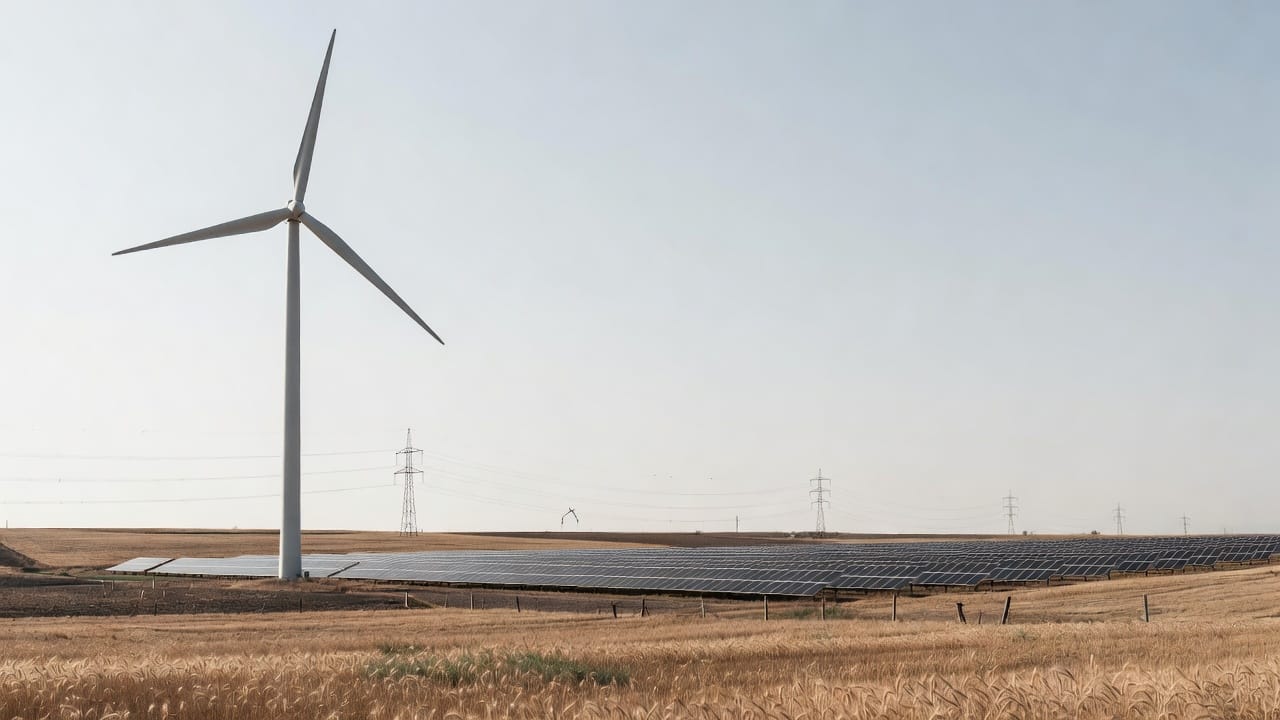
The number that is already real is not the 40 percent. It is the generation already on the wires.
The US Energy Information Administration's Electric Power Monthly, data through 31 August 2026, says renewable generation in the first eight months of 2026 was 10.2 percent higher than the same months of 2025. Utility-scale solar was up 20.0 percent. Small-scale solar was up 12.0 percent. Wind was up 7.8 percent.
In those eight months wind produced 333,367 gigawatt-hours, 10.6 percent of US electricity. Solar, utility and rooftop together, produced 329,119 gigawatt-hours, 10.5 percent. Hydropower added 180,940.
Key Facts
- EIA Electric Power Monthly, data through 31 August 2026.
- Renewable generation up 10.2 percent year over year, January through August.
- Wind 333,367 GWh (10.6 percent). Solar 329,119 GWh (10.5 percent).
- Utility-scale renewable capacity share 34.5 percent as of 1 September 2026.
- All-in renewable capacity projected from 37.7 percent to 40.4 percent within a year, passing gas on nameplate.
- More than 53 GW of new utility-scale renewable capacity projected.
Why This Matters
For a decade the argument was whether renewables could move the national total. They are now large enough that the capacity horse-race with gas is a one-year question, not a twenty-year question. The generation growth is broad: solar, wind, hydro, and geothermal all rose.
The projection sits on top of the generation figures. As of 1 September, renewables were 34.5 percent of utility-scale generating capacity. Counting every class of generator, the SUN DAY Campaign's reading of the same EIA tables puts the renewable share at 37.7 percent, rising to 40.4 percent over the coming year. That would put renewable nameplate past natural gas, and about five times nuclear capacity.
What We Don't Know Yet
Capacity is the size of the machine. Generation is what it produced. Gas plants run more hours than solar farms. A capacity crossing is not a generation crossing. The 40.4 percent is a forecast, and it is SUN DAY's reading of EIA. SUN DAY is an advocacy campaign. The underlying monthly statistics are EIA's. Policy can change the build rate. Whether capacity actually passes gas depends on completions and retirements.
Sources: Electrek, citing the US Energy Information Administration Electric Power Monthly and the SUN DAY Campaign