CRISPR Gene Drive Could Strip Superbugs of Their Drug Resistance
UC San Diego scientists use CRISPR gene drives to strip antibiotic resistance from bacteria — a potential paradigm shift in the fight against superbugs.
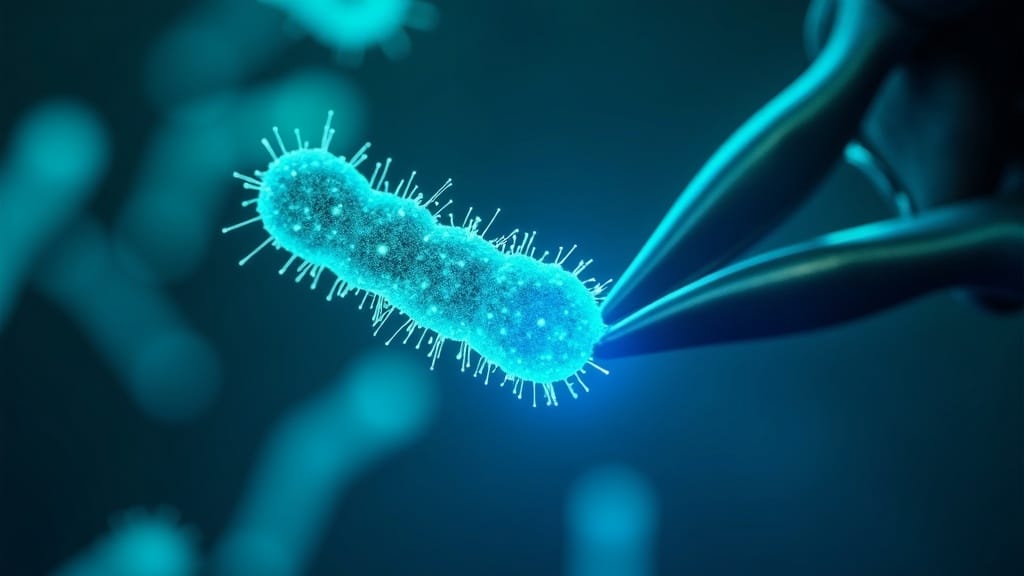
Fighting Fire With Fire
Antibiotic resistance is hurtling toward a global crisis. The World Health Organization calls it one of the greatest threats to human health, with drug-resistant infections projected to kill more than 10 million people annually by 2050 — more than cancer.
Now scientists at the University of California San Diego have unveiled a weapon that doesn't just fight resistant bacteria — it strips away their resistance entirely.
The team, led by Professors Ethan Bier and Justin Meyer, has developed pPro-MobV, a second-generation CRISPR-based system that borrows a concept from insect biology: gene drives. These are genetic tools that bias inheritance, causing a particular trait to spread rapidly through a population. They've been used experimentally in mosquitoes to block malaria transmission.
Bier and Meyer's breakthrough adapts this approach for bacteria. Their genetic cassette spreads through bacterial communities via plasmids — the very DNA vehicles that bacteria use to share resistance genes — and systematically disables antibiotic resistance genes.
"With pPro-MobV we have brought gene-drive thinking from insects to bacteria as a population engineering tool," said Bier. "With this new CRISPR-based technology we can take a few cells and let them go to neutralize antibiotic resistance in a large target population."
Key Facts
- Drug-resistant infections projected to cause 10M+ deaths/year by 2050 (WHO)
- pPro-MobV is a second-generation Pro-Active Genetics system
- Targets resistance genes on plasmids — bacteria's DNA-sharing vehicles
- Builds on 2019 proof-of-concept with Prof. Victor Nizet (UCSD Med School)
Why This Matters
No new class of antibiotics for Gram-negative bacteria has been discovered in over 50 years. The pharmaceutical industry has largely abandoned antibiotic development because it's unprofitable. The CRISPR gene drive approach represents a fundamentally different strategy: rather than creating new drugs, it undermines the resistance mechanisms that make old drugs fail.
What We Don't Know Yet
This is laboratory-stage research. Deploying gene drives in bacterial populations raises significant biosafety and regulatory questions. The ecological effects of releasing self-spreading genetic cassettes into environmental bacterial communities are unknown. The technology targets plasmid-borne resistance, but chromosomal resistance mechanisms wouldn't be affected.
Sources: ScienceDaily · LabMedica