Texas Researchers Turn Coffee Into Precision Gene Therapy Controller
Everyday caffeine becomes the key to safer, personalized cancer treatment
Texas Researchers Turn Coffee Into Precision Gene Therapy Controller
Everyday caffeine becomes the key to safer, personalized cancer treatment
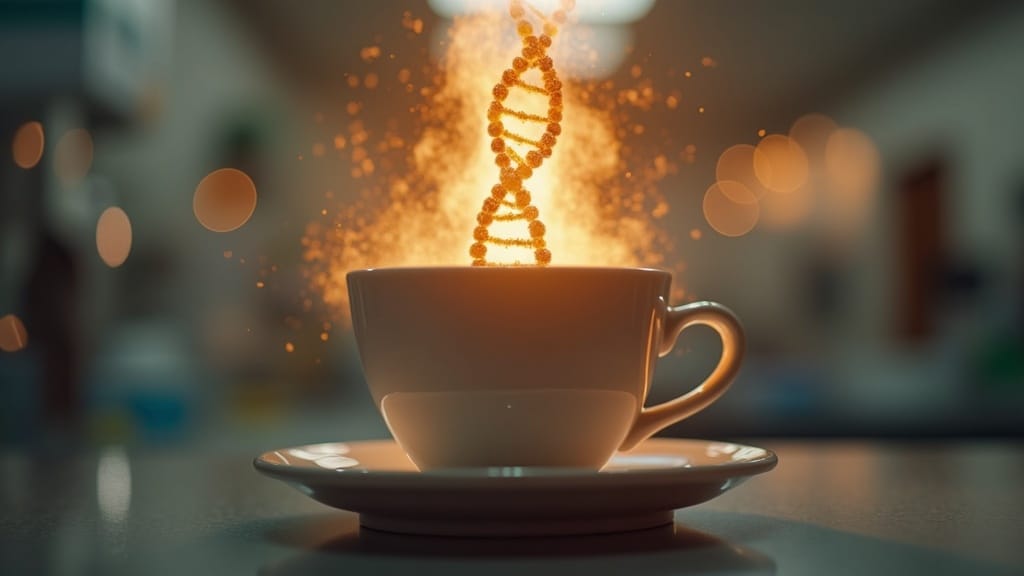
Scientists at Texas A&M Health Institute have achieved something that sounds like science fiction: they have turned your morning coffee into a precision medicine controller. Their "caffebody" technology combines caffeine with CRISPR gene editing to create a system where patients can activate gene therapy simply by drinking coffee.
The breakthrough allows unprecedented control over gene modifications. Patients need just 20mg of caffeine — roughly a third of what is in a typical cup of coffee — to switch their therapy on. When they want to turn it off, they take rapamycin, a well-studied medication. This on-off switch could revolutionize how we approach cancer treatment and diabetes management.
What makes this particularly remarkable is the elegance of using something so familiar and accessible. Instead of complex medical procedures to control therapy timing, patients could literally fine-tune their treatment over breakfast. The technology offers the promise of making gene therapies both safer and more personalized.
This represents a significant advance in precision medicine, where the goal is to tailor treatments to individual patients rather than using one-size-fits-all approaches. By giving patients direct control over when their therapy activates, researchers are addressing one of the biggest challenges in gene editing: managing potential side effects.
Key Facts
- Just 20mg of caffeine activates the system (compared to 80-100mg in a typical coffee)
- Rapamycin serves as the "off switch" for the therapy
- Technology combines caffeine metabolism with CRISPR gene editing
- Developed at Texas A&M Health Institute
- Applications include cancer treatment and diabetes management
Why This Matters
Gene therapy has enormous potential but faces significant safety challenges. Current approaches often provide limited control over when and how strongly therapeutic genes are expressed, leading to either insufficient treatment or harmful overactivity. Previous attempts to create controllable gene therapy systems have relied on expensive drugs or complex procedures.
The caffeine approach is revolutionary because it uses a molecule that humans have safely consumed for centuries. Caffeine metabolism is well-understood, predictable, and varies little between individuals. This makes dosing calculations much more straightforward than with novel pharmaceutical compounds.
What We Don't Know Yet
The research is still in early stages — no human trials have been announced yet. While caffeine is generally safe, patients would need to carefully manage their total caffeine intake from all sources to avoid over-activation of therapy. The system also requires patients to have access to both caffeine and rapamycin, which could be a logistical challenge in some healthcare settings.
We do not yet know how the timing works in practice — how quickly the therapy activates after caffeine consumption, how long effects last, or whether repeated use affects sensitivity. The research team has not disclosed which specific conditions they are initially targeting for clinical trials.
Sources: Research institutions and academic publications
Published March 03, 2026 · Category: Health & Medicine