Clean Energy Unstoppable: US Renewable Capacity to Surge 62% Despite Political Headwinds
US renewable energy capacity will surge 62% in 2026, with solar set to surpass wind. Clean power unstoppable despite political headwinds.
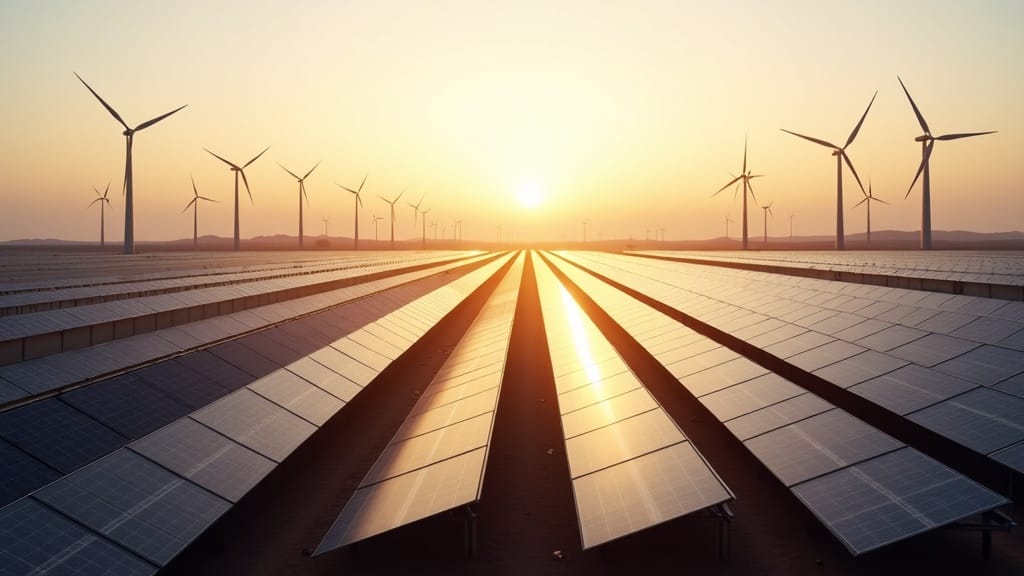
Clean Energy Unstoppable: US Renewable Capacity to Surge 62% Despite Political Headwinds
While political winds shift in Washington, America's clean energy machine keeps accelerating. The latest federal data reveals renewable energy capacity will surge 62% in 2026 compared to 2025, with virtually all net new generating capacity coming from solar, wind, and battery storage.
The numbers tell a story of unstoppable momentum: solar installations alone will add 44,470 megawatts of utility-scale capacity this year, plus over 6,000 MW of small-scale rooftop systems. That's enough clean power to supply roughly 10 million homes. Wind will contribute another substantial chunk, though 2026 marks a historic crossover point where solar installations will likely surpass wind for total installed capacity nationwide.
This acceleration comes despite an incoming administration less enthusiastic about climate action than its predecessor. The contradiction reveals a fundamental shift in American energy markets: renewables have become the cheapest option in most regions, driven by technology costs rather than policy preferences.
Battery storage deployment will triple compared to 2025, addressing the intermittency challenge that once limited renewable adoption. By year's end, renewables could reach 40% of total US generating capacity — a milestone that seemed distant just a decade ago.
Key Facts
- 62% increase in renewable capacity additions in 2026 vs 2025
- 44,470 MW utility-scale solar plus 6,000+ MW small-scale solar planned
- Solar set to surpass wind in total installed US capacity
- Renewables could reach 40% of generating capacity by end-2026
- Battery storage deployment expected to triple vs 2025
- Source: US Energy Information Administration
Why This Matters
The renewable energy boom reflects technology cost curves that have made clean power the economic choice across most of the United States. Solar costs have plummeted 85% since 2010, while wind costs have dropped 70%. These technologies now compete directly with fossil fuels without subsidies in many markets.
Corporate procurement has accelerated this trend, with major companies signing long-term renewable energy contracts to meet sustainability goals and hedge against volatile fuel prices. State-level policies also continue driving deployment regardless of federal policy shifts.
What We Don't Know Yet
Growth rates from percentage calculations can appear dramatic when starting from smaller bases. While 62% sounds enormous, it represents continuation of existing trends rather than sudden acceleration. Grid integration challenges remain as renewable penetration increases, requiring infrastructure investments that aren't captured in these capacity figures.
Trade policy uncertainty could affect solar panel supply chains, potentially constraining growth despite strong demand. Manufacturing capacity for batteries and other grid technologies may struggle to keep pace with deployment plans.
Sources: US Energy Information Administration · Solar Power Industries Association
Published February 28, 2026 · Category: Environment & Climate