New Calcium Battery Lasts 1,000 Cycles — Challenging Lithium's Grip on Energy Storage
HKUST scientists build calcium-ion batteries lasting 1,000+ cycles — a potential sustainable alternative to lithium using one of Earth's most abundant elements.
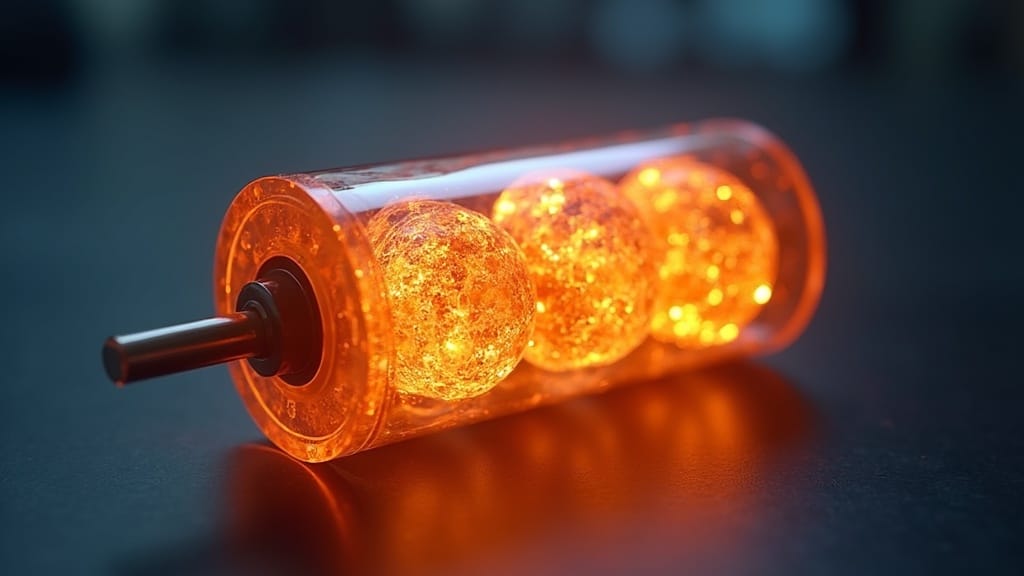
Earth's Fifth Most Abundant Element Enters the Battery Race
The world's hunger for batteries is insatiable — from electric vehicles to grid-scale storage for renewable energy. But lithium, the element at the heart of today's battery revolution, is expensive, geographically concentrated, and environmentally costly to extract.
Researchers at the Hong Kong University of Science and Technology have built a calcium-ion battery that achieves over 1,000 charge cycles using quasi-solid-state electrolytes. Calcium is the fifth most abundant element in Earth's crust — vastly more available than lithium.
"Our research highlights the transformative potential of calcium-ion batteries as a sustainable alternative to lithium-ion technology," the team reported in Advanced Science. By using redox covalent organic frameworks, they've achieved performance levels that were previously unthinkable for calcium-based systems.
Key Facts
- 1,000+ charge cycles achieved (previous calcium batteries degraded rapidly)
- Uses quasi-solid-state electrolytes for stability
- Calcium: 5th most abundant element in Earth's crust
- Collaboration: HKUST + Shanghai Jiao Tong University
- Published in Advanced Science, February 2026
Why This Matters
Lithium supply chains are strained and environmentally costly. A viable calcium-ion alternative could democratise energy storage, reduce dependence on lithium mining, and make grid-scale renewable storage cheaper and more accessible worldwide.
What We Don't Know Yet
Calcium-ion batteries remain far behind lithium-ion in energy density and are years from commercial viability. The 1,000-cycle milestone, while impressive for calcium, is standard for lithium-ion. Manufacturing processes haven't been developed at scale.
Sources: HKUST · Interesting Engineering