Calcium-Ion Batteries Hit 1,000 Cycles in Breakthrough That Could End Lithium Dependence
HKUST researchers achieve 1,000 cycles with calcium-ion batteries using a novel electrolyte — a step toward ending dependence on scarce lithium.
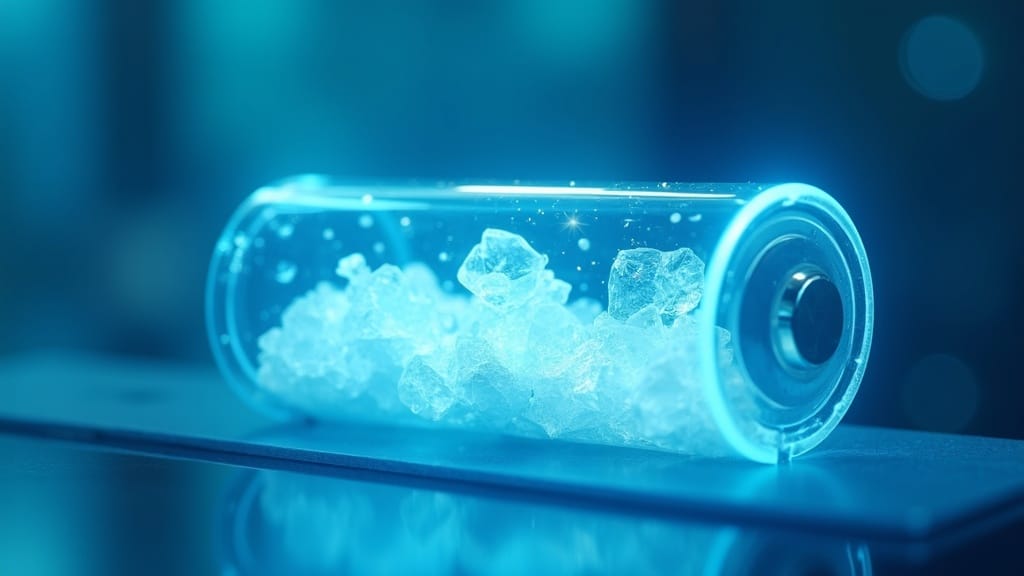
Researchers at the Hong Kong University of Science and Technology have achieved a significant milestone in the quest to move beyond lithium: calcium-ion batteries that sustain 1,000 charge-discharge cycles using a novel quasi-solid-state electrolyte.
Calcium is the fifth most abundant element in Earth's crust — vastly more available than lithium, which is concentrated in a handful of geopolitically sensitive regions. If calcium-ion batteries can approach lithium-ion performance, the implications for grid-scale energy storage, electric vehicles, and energy equity are enormous.
The HKUST team's innovation solves two problems that have plagued calcium battery research: poor ion transport through electrolytes and limited cycle life. By designing quasi-solid-state electrolytes made from carbonyl-rich covalent organic frameworks, they've achieved performance that puts calcium-ion firmly on the map as a serious contender.
The cost and supply-chain fragility that constrain the current lithium-dominated battery market could be fundamentally disrupted. Lithium is concentrated in Chile, Australia, and China — creating the kind of resource dependency that has historically driven geopolitical tension. Calcium is everywhere.
Key Facts
- 1,000 charge-discharge cycles achieved with the new calcium-ion design (HKUST / ScienceDaily)
- Calcium is the 5th most abundant element in Earth's crust
- Lithium supply is concentrated in three countries, creating supply-chain vulnerability
- Novel quasi-solid-state electrolyte uses carbonyl-rich covalent organic frameworks
- The global battery market is projected to exceed $400 billion by 2030
Why This Matters
The world's green energy transition runs on batteries. Electric vehicles, grid storage for wind and solar, portable electronics — all depend on battery chemistry. Right now, that means lithium-ion, and lithium-ion means dependence on a scarce, geographically concentrated resource.
Sodium-ion batteries have emerged as the leading alternative, but calcium offers theoretical advantages. Calcium is divalent — each ion carries two charges, compared to one for lithium or sodium — which means higher potential energy density. If the engineering challenges can be solved, calcium-ion could leapfrog sodium-ion entirely.
HKUST's breakthrough addresses the key bottleneck: making calcium ions move efficiently through a stable electrolyte. It doesn't solve every problem, but it proves the concept works at a level that commands attention from industry.
What We Don't Know Yet
These are lab-scale results. Commercial viability is years, possibly a decade, away. The gap between a working lab cell and a manufacturable product is enormous.
One thousand cycles is good, but lithium-ion batteries in mature systems achieve 2,000 to 5,000+ cycles. Calcium-ion needs to close that gap to compete.
Energy density and power output are not yet competitive with lithium-ion. The electrolyte innovation is a step, not a finish line.
Quasi-solid-state electrolytes add manufacturing complexity that could affect cost. No cost analysis has been published yet — and cost is ultimately what determines whether a battery technology succeeds or fails.
The research is peer-reviewed and credible, but it's one team's result. Independent replication and scaling studies will determine whether calcium-ion batteries have a real commercial future.
Sources: HKUST · ScienceDaily
Published 16 February 2026 · Category: Science & Technology