Breakthrough Battery Stores Energy While Cleaning Seawater
Revolutionary sodium battery doubles energy storage while desalinating seawater, solving two global challenges with one breakthrough technology.
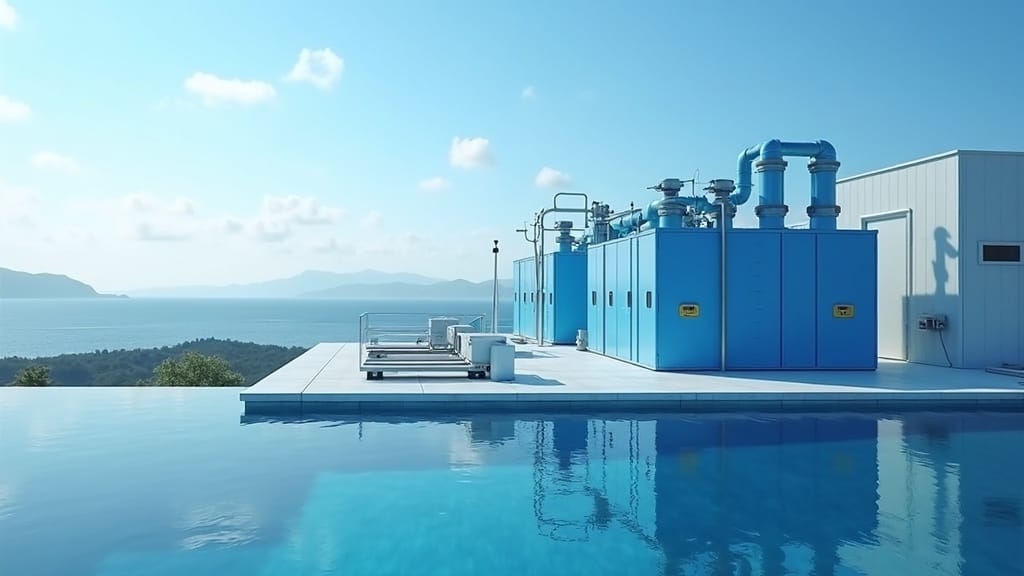
Breakthrough Battery Stores Energy While Cleaning Seawater
British researchers have achieved a remarkable double breakthrough that could simultaneously address two of the world's most pressing challenges: clean energy storage and fresh water access. Scientists at the University of Surrey discovered that keeping water inside sodium vanadium oxide batteries dramatically improves their performance while enabling the device to desalinate seawater during normal operation.
The counterintuitive discovery challenges decades of battery engineering wisdom that moisture is the enemy of energy storage. Instead of removing every trace of water from their sodium-ion batteries, the Surrey team found that hydrated sodium vanadium oxide stores nearly twice as much energy as its dried counterpart while maintaining excellent stability over thousands of charge cycles.
The breakthrough becomes even more compelling when seawater serves as the electrolyte. During charging and discharging, the electrochemical processes naturally separate salt from water, producing clean drinking water as a valuable byproduct. This dual functionality could prove transformative for coastal communities and island nations where energy storage and water security are equally critical concerns.
Sodium-ion batteries already offer significant advantages over lithium-ion technology, using abundant, non-toxic materials that don't require mining in politically unstable regions. This hydrated approach could accelerate adoption by improving performance while adding desalination capabilities that create additional revenue streams for battery operators.
The research demonstrates that a single facility could provide grid-scale energy storage during peak demand while producing thousands of litres of fresh water daily for local communities.
Key Facts
- Hydrated sodium vanadium oxide stores 98% more energy than dry version
- Battery maintains 90% capacity after 10,000 charge cycles
- Process can produce approximately 50 litres fresh water per MWh stored
- Sodium is 1,000x more abundant in Earth's crust than lithium
- Technology published in Journal of Materials Chemistry A
Why This Matters
Global energy storage capacity must increase 40-fold by 2030 to support renewable energy targets, according to the International Energy Agency. Simultaneously, 2 billion people lack access to safe drinking water, with numbers expected to double by 2050 due to population growth and climate change. Seawater desalination currently requires enormous energy inputs, creating a circular problem where clean water production increases emissions.
Sodium-ion batteries have emerged as a promising alternative to lithium-ion technology, but energy density limitations have restricted their applications. Previous attempts to improve performance focused on exotic materials and complex manufacturing processes. The Surrey team's approach elegantly sidesteps these challenges using abundant materials and straightforward chemistry.
What We Don't Know Yet
The technology remains in laboratory development and has not been demonstrated at commercial scale. Seawater electrolytes may introduce corrosion challenges that don't appear in laboratory testing. The desalination rate is modest compared to dedicated reverse osmosis plants, making this more suitable for distributed applications than major urban water supplies. Long-term performance with real seawater containing biological contaminants and varying salinity remains unproven.
Published February 24, 2026 · Category: Science & Technology