Australian Koalas Overcome 'Evolutionary Doom' Through Rapid Population Recovery
Latest news: Australian Koalas Overcome 'Evolutionary Doom' Through Rapid Population Recovery
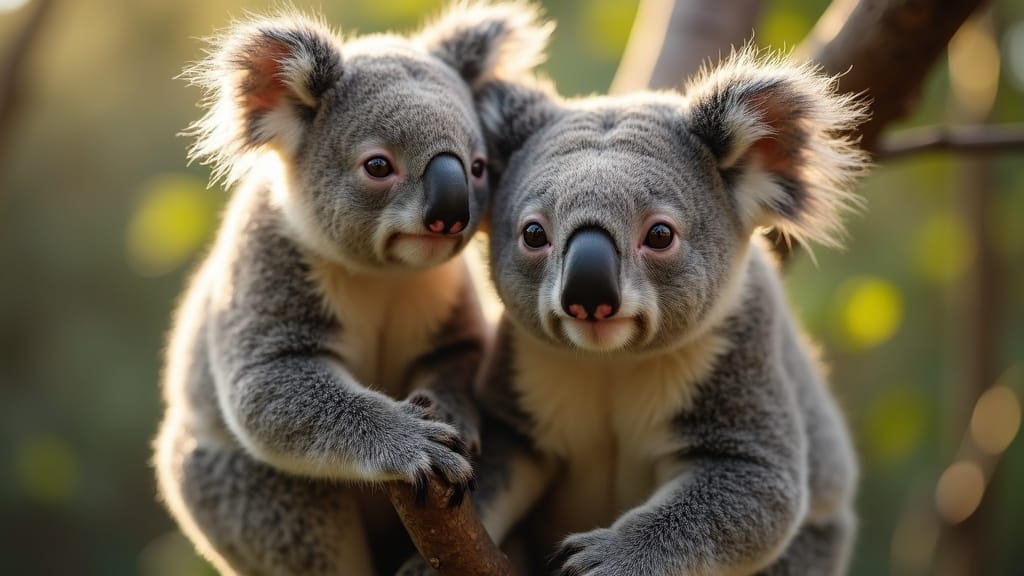
Australian koalas in Victoria are rewriting the rules of conservation biology, proving that genetic bottlenecks — long considered evolutionary dead-ends — can be overcome through rapid population recovery. After nearly vanishing in the 1890s, Victorian koalas have successfully reshuffled their DNA and fostered new mutations, restoring evolutionary potential that scientists once thought was permanently lost.
This discovery challenges fundamental assumptions about endangered species recovery. Genetic bottlenecks occur when populations shrink so dramatically that genetic diversity plummets, typically leading to inbreeding depression and reduced adaptability. Conservation biologists have long viewed these bottlenecks as nearly irreversible damage, making species permanently vulnerable to extinction.
But Victorian koalas have demonstrated nature's remarkable capacity for genetic recovery. Through rapid population expansion over recent decades, the koalas have effectively reshuffled their limited genetic material, creating new combinations and allowing beneficial mutations to emerge and spread through the population.
The research reveals that population growth itself can be a powerful conservation tool. As koala numbers expanded, genetic recombination increased exponentially, providing more opportunities for advantageous genetic combinations to emerge. New mutations arising in the growing population faced less genetic interference, allowing natural selection to operate more effectively.
For conservationists worldwide, this provides hope for other species facing genetic bottlenecks. Many endangered animals — from California condors to European bison — carry the genetic scars of population crashes. The koala research suggests that aggressive population growth strategies, rather than just maintaining minimal viable populations, could help species recover their evolutionary potential.
Key Facts
- Victorian koalas nearly extinct in 1890s, now recovering
- Population expansion has reshuffled DNA and fostered new mutations
- Genetic recovery previously thought impossible after severe bottlenecks
- Research published in peer-reviewed scientific literature
- Provides model for other bottlenecked species recovery
Published by The Bright Side — delivering solutions-focused journalism