Aldabra's Wild Giant Tortoises Now Number About 183,000
A new census puts Aldabra's wild giant tortoises at about 183,000, the highest figure recorded, after the species was hunted below 1,000 in the 19th century.
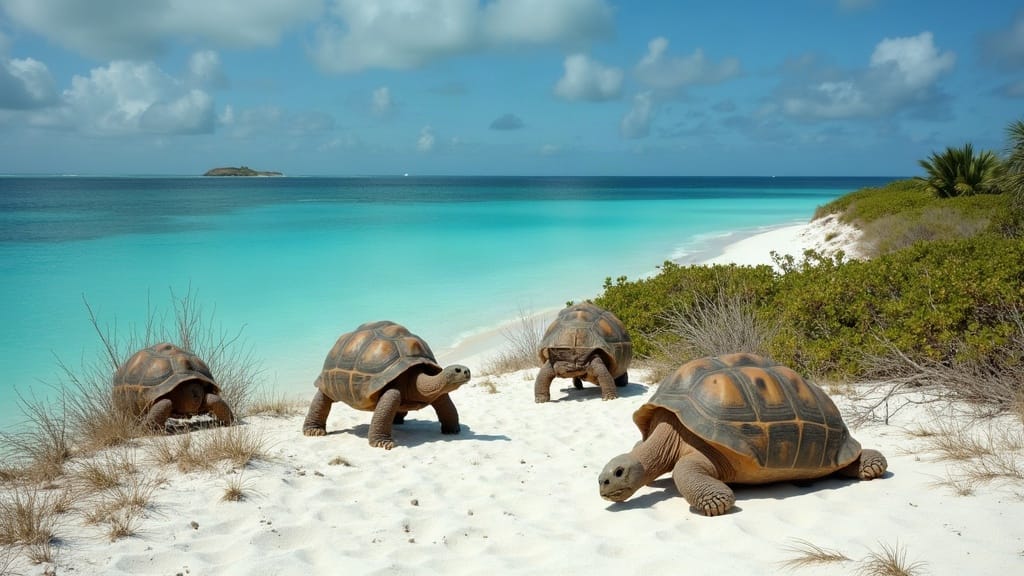
A five-year census finds the highest figure ever recorded — and explains why the old number was low
The Aldabra giant tortoise population stands at a best estimate of almost 183,000 adults and subadults, the highest figure ever recorded for the species, according to a study led by the Seychelles Islands Foundation and the University of Exeter and published in Ecology and Evolution. The team analysed counts made by foundation staff from 2018 to 2022. It is the first rigorous, atoll-wide estimate. The widely cited late-1990s figure of about 100,000 did not account for animals hidden in dense scrub, so this is not evidence that the population suddenly doubled. Researchers say the population was relatively stable across the five years. What the number does show is recovery from a collapse. Heavy hunting in the 19th century cut Aldabra's tortoises to fewer than 1,000. The atoll became a strict nature reserve in 1981 and a UNESCO World Heritage Site in 1982. It is one of only two places where giant tortoises still live in the wild. The Galápagos population is much smaller. The new estimate is larger than the human population of the Seychelles. Foundation chief executive Frauke Fleischer-Dogley called it proof of what long-term protection can do.
Key Facts
- Best estimate: almost 183,000 adults and subadults
- Counts: 2018–2022, published October 2026
- 19th-century low: fewer than 1,000
- Reserve status: 1981; UNESCO World Heritage: 1982
- Old public figure of 100,000 undercounted animals in scrub
- Sources: University of Exeter / phys.org, BBC Newsround
Why This Matters
Conservation stories often celebrate a release of twenty animals. This is what it looks like when a place is actually left alone for forty years and then counted properly. The caveat is the point: a bigger number can be a better method, and the authors said so.
What We Don't Know Yet
- Climate and sea-level risk to a low atoll are not solved by a census
- The population is stable, not exploding
- Counts miss hatchlings; this is adults and subadults