800 Species Found in Hidden World Beneath the Pacific
160 days at sea, 800 species documented, many never seen before — and deep-sea mining companies are watching closely.
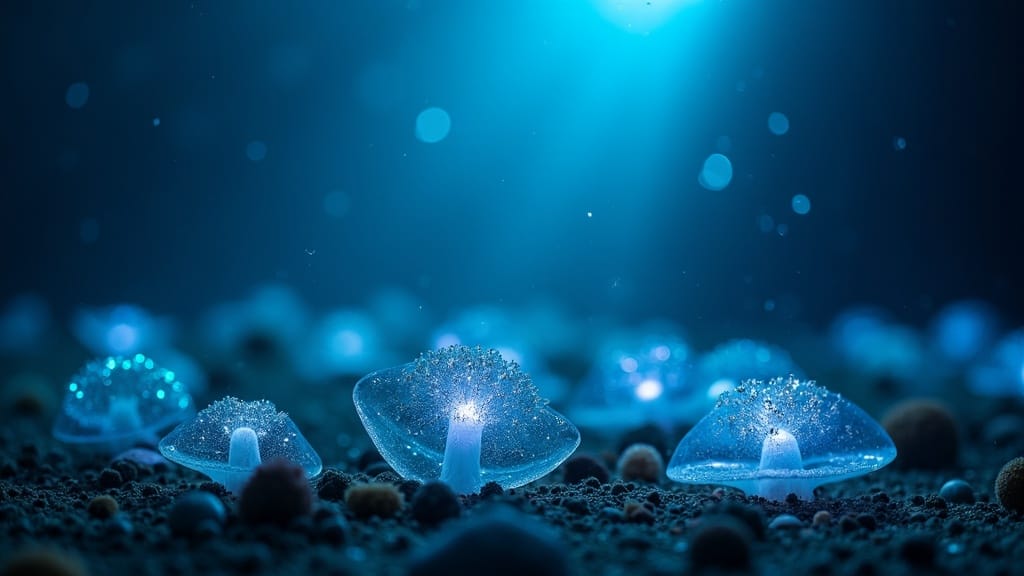
Over five years and 160 days at sea, an international team of marine scientists has pulled back the curtain on one of Earth's last unexplored frontiers — and what they found is extraordinary.
Nearly 800 species have been documented living on the deep Pacific seabed, in the Clarion-Clipperton Zone between Hawaii and Mexico. Many of these organisms — from delicate glass sponges and ghostly sea cucumbers to entirely new species of worms, crustaceans, and molluscs — had never been seen by human eyes before.
The timing of this discovery gives it urgency far beyond pure science. The Clarion-Clipperton Zone sits atop vast deposits of polymetallic nodules — potato-sized rocks rich in cobalt, manganese, nickel, and copper — metals essential for batteries powering the clean energy transition. The International Seabed Authority is moving closer to authorising commercial mining in these waters.
Key Facts
- Nearly 800 species documented, many new to science (ScienceDaily)
- 5-year survey covering 160 days at sea
- Conducted in the Clarion-Clipperton Zone — a primary deep-sea mining target
- International Seabed Authority mining regulation decisions pending
Why This Matters
You can't protect what you don't know exists. Before this survey, the biodiversity of the deep Pacific seabed was largely guesswork. Now there's a scientific baseline — a census of life against which the environmental impact of mining can be measured.
The findings also challenge the long-held assumption that the deep ocean floor is a biological desert. Nearly 800 species in a single zone suggests these ecosystems are far richer and more complex than previously understood. Mining could destroy habitat that took millennia to form.
What We Don't Know Yet
Eight hundred species is likely an undercount — the deep sea is vast and the survey covered limited areas. We don't know how many of these species exist only in the Clarion-Clipperton Zone. Recovery times for deep-sea ecosystems after disturbance are measured in centuries, if recovery happens at all, but long-term data is sparse. The economic and geopolitical pressures driving deep-sea mining may ultimately outweigh conservation arguments.
Sources: ScienceDaily
Published February 18, 2026 · Category: Science & Technology