Scientists Unlock Ocean's Hidden Treasures in Deep-Sea Biodiversity Breakthrough
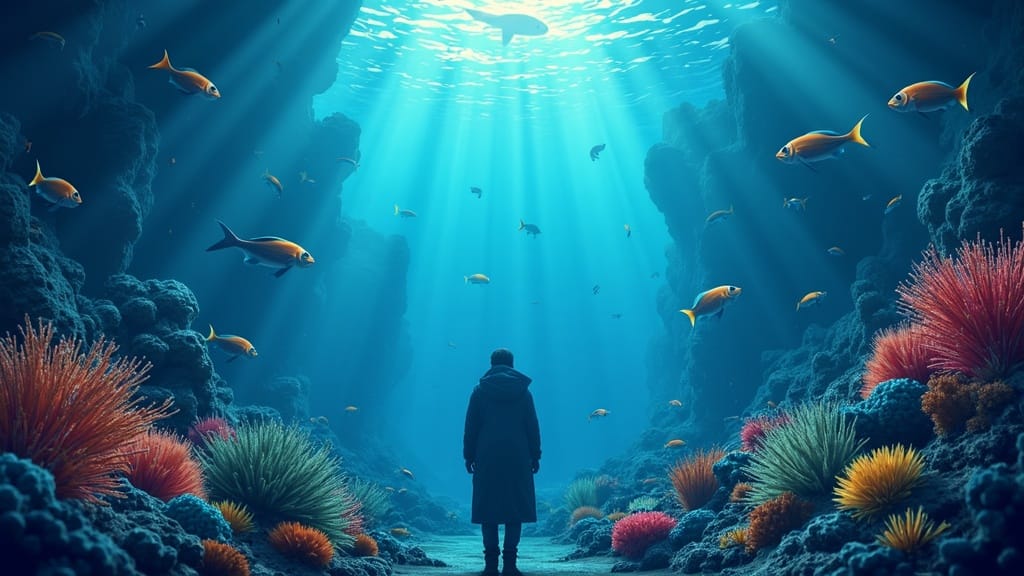
Scientists Unlock Ocean's Hidden Treasures in Deep-Sea Biodiversity Breakthrough
24 new species discovered in Pacific mining zone reveal extraordinary life in Earth's final frontier
In the crushing depths of the Pacific Ocean, where sunlight never penetrates and pressure would instantly destroy human life, scientists have uncovered a treasure trove of previously unknown life forms. Researchers exploring the Clarion-Clipperton Zone—a vast abyssal plain targeted for deep-sea mining—discovered 24 new species of amphipods, including an entirely new superfamily that represents a major branch of the evolutionary tree.
This remarkable find illuminates the extraordinary biodiversity thriving in Earth's most extreme environments. The newly discovered creatures, tiny crustaceans adapted to life under crushing pressure and near-freezing temperatures, challenge our understanding of life's limits and reveal evolutionary pathways that developed in isolation over millions of years.
The discovery carries urgent conservation implications as industrial interests eye the deep sea for mineral extraction. These findings provide crucial baseline data for protecting ecosystems that took millions of years to evolve but could be destroyed in decades by mining activities.
Key Facts
- 24 new amphipod species discovered in single expedition
- Discovery includes rare new superfamily—major evolutionary classification
- Location: Clarion-Clipperton Zone, Pacific Ocean (4,000+ meters depth)
- Area covers 6 million square kilometers (roughly size of Australia)
- Deep-sea mining licenses cover 1.45 million square kilometers of seabed
What We Don't Know Yet
Taxonomic classification takes years to complete, and many specimens require further study to confirm species status. The full extent of biodiversity in the region remains unknown, with most deep-sea areas never surveyed. Limited research funding constrains exploration efforts, while mining timeline pressures could outpace scientific assessment.
The ecological roles and interconnections of these new species are poorly understood, making it difficult to predict mining impacts on deep-sea ecosystems.